What suppliers need to service African Markets


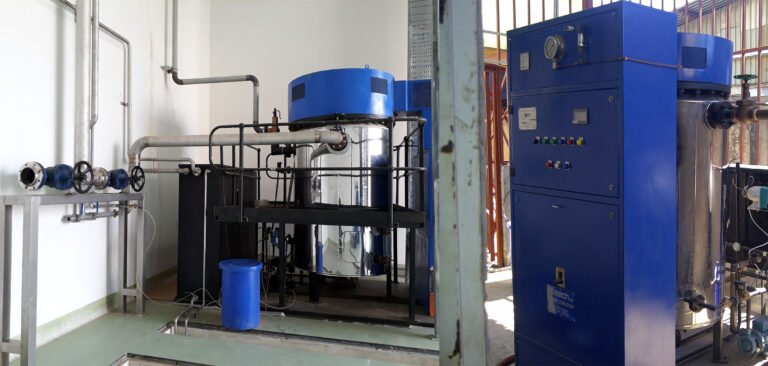
Boilers and water treatment solutions are used in a vast array of industries, from farming to manufacturing, textile production and even oil separation. In Africa, and Southern Africa in particular, part availability and servicing capabilities become important considerations for companies when choosing a supplier.

Lionel Maasdorp, MD of Allmech, leading South African manufacturer of boilers and supplier of water treatment components, says that for the supplier/customer relationship to function optimally, companies need to take time to understand their customers’ needs and context. In the countries where Allmech works, including Eswatini, Mozambique, Botswana, Zimbabwe, Zambia, Mauritius and Saudi Arabia, there are different requirements and localised nuances that need to be taken into consideration when servicing customers.

Maasdorp adds that there are different demand rhythms in each market and demand for boilers, for example, may fluctuate depending on issues like power supply reliability in a particular country. “Because boilers can be a capital expenditure decision for a company, the choice to purchase one can also take some time,” he says. However, chemical usage and replacement parts usually have fairly consistent demand and suppliers need to be able to balance their stock levels so that they can help clients with servicing requirements as and when needed.

Proactive maintenance
“We are seeing a shift in the approach to maintenance, in Africa in particular, where companies are becoming more proactive and inclined to do the necessary maintenance and upkeep of equipment rather than waiting for an item to fail before repairing it,” says Maasdorp.

There are obvious benefits to this approach and Maasdorp says that clients are saving money because their production is less affected by planned maintenance and small repairs are made before they become major failures that have a bigger fallout for uptime.

Supplier approaches
As the water treatment and boiler applications are so broad, suppliers need to work closely with customers to ensure that the solution they provide is relevant and will be useful to the client over the long term. Maasdorp says that in terms of Allmech’s approach, “we work with customers to resolve issues that arise so that we supply a comprehensive solution as our involvement is a relationship and not just a sale. We want to be part of their running solution for their plant.”

To enhance supply security to customers, in 2019 Allmech also became the sole agent for Runxin valves in South Africa. This allows it to carry a large range of spares to service valves and test them on a test bench to ensure repairs are correct.

Allmech supplies Runxin valves with flow rates ranging from 2 000 l/hr, such as the F56A1 manual filter valve and the F63B/C automatic filters, right through to 30 000 l/hr F112A softener and F112B filter valves.

“We really work hard to provide an end-to-end solution for our water treatment clients, whether they are business owners, engineers or downstream distributors. They know they can come to us for expertise on which valve to use for a specific application, for repairs and maintenance, and for other technical input,” says Maasdorp.
Why submersible pumps rise above the rest in fluid handling


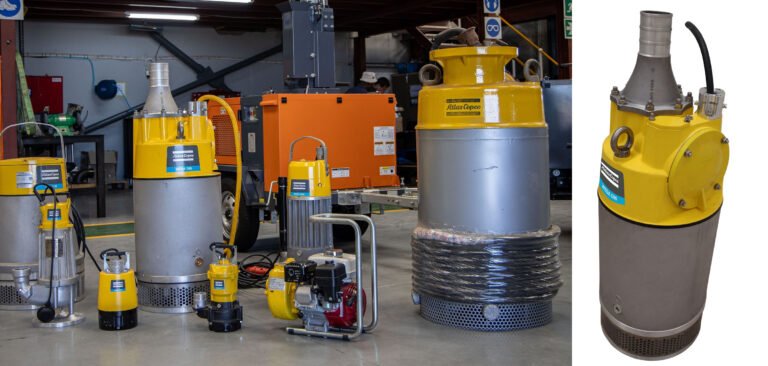
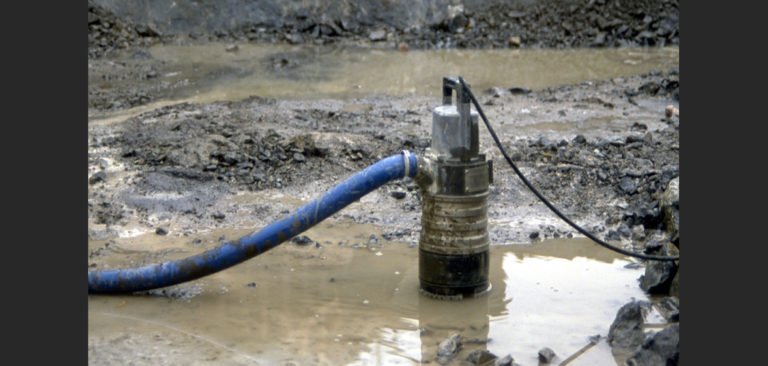
Submersible pumps have long been a staple in the world of fluid handling and pumping, with their presence becoming more pronounced, especially in particular applications like sump pumping, wastewater management and numerous industrial processes.

Ruaan Venter, Rental Development Manager at IPR, says that while engineers have various solutions at their fingertips submersible pumps often stand out especially when compared to vertical spindle pumps. So, what gives these submersible devices their edge?

“First and foremost, submersible pumps are known for their superior energy efficiency,” Venter says. “This elevated efficiency not only makes them outperform their vertical spindle counterparts, but it also leads to significant cost savings in the long run.”

Space is often at a premium in many dewatering setups, and this is where submersible pumps have the upper hand. Their direct placement in the fluid they handle means there is no need for extended piping or additional external infrastructure. This innate compactness becomes a boon, especially in locations where space is tight.

Maintenance is also a recurring concern in any wastewater, mining or industrial environment and Venter says that submersibles come out on top here as well. With fewer moving parts than vertical spindle pumps, which often come with above-ground mechanical setups, submersible pumps are less prone to wear. This reduced wear translates into more dependable performance, ensuring a smoother operational experience.

Fluid handling is the core of any pump, and submersible pumps excel in this domain. Venter explains that due to their fully submerged operation, these pumps are essentially immune to issues like cavitation or airlocks, which sometimes plague vertical spindle pumps. This submerged state ensures a consistent and smooth pumping process, offering significantly enhanced reliability.

“But it’s not just about efficiency and reliability. Submersible pumps also promise a quieter operational experience. Their underwater functioning naturally dampens sound and curtails vibrations, offering a noise-free solution,” he continues.

Moreover, submersible pumps are stalwarts when it comes to reliability, even in challenging environments. Their underwater operation shields them from many external factors, ensuring they last longer and operate with unwavering reliability, even when conditions turn hostile.

But what if the fluid isn’t clear water? Submersible pumps have got that covered too. They are adept at processing an array of fluids, even those riddled with abrasive solids. This versatility makes them an excellent choice for varied tasks, be it sewage or other wastewater pumping applications or dewatering in intricate mining operations or sumps in buildings or other structures.

Safety is paramount, and submersible pumps don’t skimp on this aspect either. Their positioning underwater diminishes risks linked with rotating parts and potential leaks, issues that are often more glaring with above-ground pumps.

In today’s age, where environmental consciousness is key, submersible pumps rise to the occasion. Many can be customised to avert fluid leaks, ensuring they operate with minimal environmental impact, adhering to contemporary ecological regulations and sustainability goals.

Lastly, their design boasts flexibility. Depending on the depth requirements, these pumps can be adapted, ensuring a fluid handling system that aligns perfectly with specific operational demands.

“The decision between submersible pumps and vertical spindle pumps really comes down to the unique demands of the application in question, but given the vast array of benefits submersibles bring to the table – from energy efficiency to environmental safety – they undeniably present a compelling argument for their widespread adoption across various sectors,” Venter concludes.

IPR is the master distributor for the full range of Atlas Copco submersible dewatering pumps, as well the Toyo range of heavy-duty slurry pumps. The company has an extensive reference base and offers its pumps for outright purchase or on a rental basis. Its skilled team can assess an individual application and propose the most appropriate solution that will ensure the lowest total operating cost for a customer.

Right pumps will mitigate mines’ rainy season risks


During the drier months of the year, it is easy to forget that the pumping equipment at mining sites or process plants might not be up to the demands that the rainy season brings.

In fact, 90% of pump failures are from putting the wrong pump into the application. This is the view of Justin Bawden, Key Account Manager at Integrated Pump Technology, local distributors of Grindex submersible pumps. Being aware of the factors and influences of each application is vital to providing a suitable and lasting solution – which will mitigate the risk of flooding and consequent loss of life, equipment and production.

“Where dewatering activity is conducted, it is imperative that monitoring and forecasting of water inflows is done – whether on opencast or underground mines,” says Bawden. “This will allow for the necessary planning and specification of the correct capacity of pumping equipment, as well as hose sizes and materials.”

On one site, he says, a customer was able to meet dewatering requirements with just two 37kW pumps for most of the year. With the rainy season, they had to add another four of these units, based on their previous experience. He points out that Integrated Pump Technology understands these changing needs, and keeps the right pumps and quantities in stock.

“Another challenge is that mines will generally have multiple pumps located around their operations, and these are frequently moved from one location to another as needs change,” he says. “Personnel can lose track of which models and capacities are needed where – and the size and condition of the pipelines in place may not always suit the application.”

When responding to customer requests, Integrated Pump Technology is careful to ensure that the existing pipeline on site is suited to the scale of the pumping solution. This means being clear on the pipeline’s diameter, length, material of construction, age and condition – as well as valves or bends that may affect flow.

Technological innovation is also helping to mitigate risk of pump failure, he explains. The smart unit on Grindex pumps, for instance, protects them against overheating, phase rotation and phase loss. There is also the air release valve, making Grindex pumps capable of running dry for extended periods of time.

He also recommends the regular performance testing of dewatering pumps to ensure they are still operating on their rated curve. This will give added peace of mind that these units will deliver the expected duty in critical dewatering functions. The tests should also confirm the energy efficiency of the pumps, to control operating costs.

The long term benefit of such tests is significant, he explains, as timeous maintenance interventions will ensure a longer product lifecycle. As part of its service offering, Integrated Pump Technology can run these specialised tests for customers on a range of pumps. Keeping sites effectively dewatered needs quick service turnaround too, so critical parts and basic repair kits are readily available for Grindex submersible pumps, notes Bawden.
