Pumps are a vital technology that helps operators complete essential processing and transfer functions in many industrial applications across multiple markets. Without this technology, these applications wouldn’t function as optimally as they do today.
When it comes to these industrial applications, making the right pump technology choice is paramount. While many different technologies exist, air-operated double-diaphragm (AODD) pumps tend to be a common choice for a diverse range of fluids, such as chemicals, food, oil, paint and adhesives, among many others.
AODD pumps work well with these fluids because of their design characteristics. These pumps, which rely on compressed air to function, can self-prime, run dry, process fluids with solids up to 3 in. (76 mm) in diameter, achieve suction lift up to 30 ft. (9 m), resist deadhead pumping conditions and even operate while submerged. AODD pumps also feature a sealless design, which keeps valuable fluids in the pump.
Even with all these perks, another careful consideration must be made to enjoy all the benefits of AODD pumps. Operators must also pick the right diaphragm from a verified supplier when selecting this pump technology for an application. This decision is critical to the safety and efficiency of the AODD pump and helps ensure – with the right diaphragm – the pump’s long-term integrity and functionality.
Pre-selection
Before selecting the proper diaphragm, operators should ensure they are making that selection from a verified supplier or one recommended by the pump manufacturer. Operators who neglect this pre-selection step run the risk of obtaining a diaphragm that is not up to the standards set by the manufacturer.
In some cases, operators could be purchasing a pirated diaphragm. In either case, these unverified parts can negatively impact the performance of the AODD pumps. Detrimental effects include performance downgrades in the pump’s operation, pump damage and the lack of a warranty and manufacturer support.
Diaphragm materials
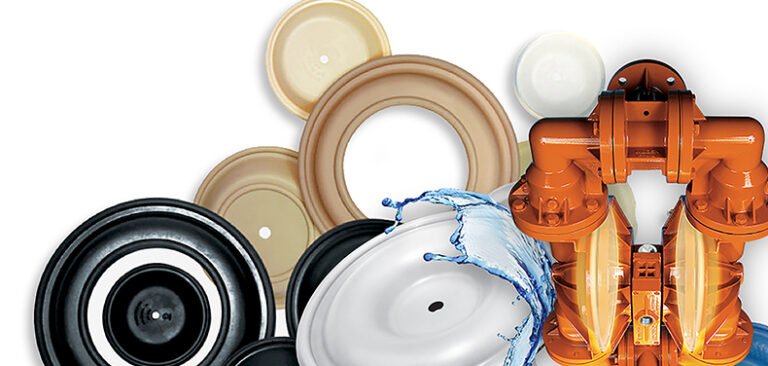
AODD pumps have been around since 1955, giving operators plenty of time to test and review the impact of different diaphragms on this technology. Three main material families are used to categorize AODD pump diaphragms – rubber, thermoplastic elastomer (TPE) and polytetrafluoroethylene (PTFE) or Teflon. Each material provides characteristics that make them well suited for varying applications.
Rubber: Rubber diaphragms are made from synthetic rubber with a nylon fabric mesh to assist with the diaphragm’s flexibility. There are four available rubber diaphragm materials, which are neoprene, Buna-N, EPDM and Viton. Each of these materials aids the AODD pump in different applications and conditions.
For example, neoprene is a general-purpose, low-cost diaphragm designed for nonaggressive chemical applications, such as water-based slurries and seawater. It is known for its longevity and abrasion resistance. Buna-N works best with petroleum and oil-based fluids, ranging from gasoline to turpentine. Also referred to as nitrile, this diaphragm provides moderate longevity and abrasion resistance. It also functions well in food and beverage applications.
EPDM is a low-cost alternative diaphragm for pumping dilute acids or caustics. Typically found in the food, pharmaceutical, manufacturing and paint and coating industries, EPDM diaphragms are known for having good longevity and moderate abrasion resistance. On the flip side, Viton diaphragms are designed to handle extremely hot temperatures and harsh chemicals. It features exceptional performance with aggressive fluids, such as aromatic and chlorinated hydrocarbons, and has moderate longevity and abrasion resistance.
TPE: TPE diaphragms are made through injection molding, meaning they don’t require a fabric reinforcement like their rubber counterparts. These diaphragms also have four material options, which are polyurethane, Wil-Flex®, Saniflex™ and Geolast®.
Polyurethane functions as the general-purpose diaphragm, designed for nonaggressive chemical applications such as water and wastewater. Its longevity and abrasion resistance are exceptional. Wil-Flex serves as a more affordable version of PTFE. Made of Santoprene®, this diaphragm is best suited for handling acidic and caustic fluids, such as sodium hydroxide and hydrochloric acid. Because it has excellent longevity and abrasion resistance, this diaphragm is used in the chemical, pharmaceutical, wastewater and chemical industries.
Saniflex provides good longevity and excellent abrasion resistance. Made of Hytrel®, this diaphragm is ideal for food processing applications and offers low compression set characteristics. Geolast, similar to nitrile (Buna-N), is commonly used in petroleum applications due to its enhanced oil resistance and low oil swell. It offers moderate longevity and good abrasion resistance.
PTFE: Due to its chemical makeup, PTFE can be used with a wide range of fluids, even highly aggressive variations, such as hydrocarbons, acids, caustics, ketones and acetates. Featuring excellent longevity and moderate abrasion resistance, PTFE works best in food and beverage and pharmaceutical applications. PTFE, however, is non-elastic, so a backup diaphragm of a different material is required for flexibility and memory. Options for backup diaphragms are Neoprene, Saniflex and high-temperature Buna-N.
Several considerations
Operator knowledge and experience with diaphragms serve as one option for diaphragm selection. But even the most experienced operator should still look at several factors before choosing their diaphragm. As we’ve seen with the materials and their distinct properties and features, there isn’t a universal diaphragm for every application.
To determine the best diaphragm for a given application, there are seven primary factors to consider – abrasion resistance; chemical resistance; temperature ranges; sanitary standards; inlet condition; longevity; and cost.
Abrasion resistance is the diaphragm’s ability to withstand wear and friction when encountering solids and particles in the processed fluid. Chemical resistance measures the compatibility of the diaphragm’s material with the processed fluid. Temperature ranges indicate the flexibility and performance of the diaphragm at varying temperatures, as well as its capabilities in extremely high and low temperatures.
Sanitary standards come into play primarily in diaphragms used in food and beverage applications. These standards help ensure that the diaphragm complies with hygienic or sanitary standards. The inlet condition looks at a diaphragm’s capacity to move fluid from one place to another. Longevity, also known as flex life, is the expected lifecycle of the diaphragm before replacement. Cost involves multiple factors, such as initial price, rated longevity of the application, downtime expenses and diaphragm replacement labor.
Compatibility cheat sheet
With material capabilities and performance factors identified, operators can make an informed decision about what diaphragm will work best with their AODD pumps in a given application. But there is also an expedited way to guide operators to the type of diaphragms that will best suit their respective applications.
Wilden®, part of PSG®, developed a Diaphragm Selection Guide that shows which materials work best in each common AODD pump application. The guide compares and rates the longevity, abrasion resistance, chemical resistance, temperature limits and relative cost of each material type. Operators can use the guide, along with additional research and expert advice, as a snapshot into each diaphragm’s capabilities and performance in different applications.
The guide uses ratings from A to C to help operators determine which diaphragms keep the application’s maximum fluid temperature as close to the center of the operating temperature limits as possible. Wilden recommends using diaphragms with “A” or “B” ratings for the best diaphragm performance.
Additionally, Wilden has a more extensive guide for diaphragm materials and their performance when processing different chemicals. Known as the Wilden AODD Pump Chemical Compatibility Guide, this resource provides a rating system for more than 700 chemicals on different diaphragm materials.
The rating system runs from A to D, with A being the best rating and D being the least favorable. The diaphragm materials are rated against each chemical, with A meaning the chemical has a minor effect on the diaphragm; B meaning the effect is minor to moderate; C meaning the effect is moderate to severe; and D meaning that diaphragm material is not recommended for use with that chemical.
For example, EPDM and PTFE have an “A” rating when handling acetic acid, while polyurethane and Saniflex pull “D” ratings. Meanwhile, all diaphragm materials perform well when handling aluminum chloride, with each one earning “A” ratings except for polyurethane and Saniflex, which both earned “B” ratings for that chemical.
The guide also provides ratings for metal housings and plastics. The metal housings included in the guide are alloy C, aluminum, cast iron, Halar ECTFE-coated, and stainless steel. The plastics category includes acetal, nylon, polyethylene, polypropylene, PVC and PVDF.
Conclusion
Whether an operator needs to pump water, wastewater, paints, slurries, food products or acids, AODD pumps are designed to process all of them effectively and efficiently. To get the best performance out of an AODD pump, operators must select the best diaphragm for their application. The optimum diaphragm will help ensure safe, efficient and cost-effective functionality while contributing to the pump’s longevity.
Choosing the right diaphragm means carefully identifying and considering multiple factors, processes and application parameters into the equation. Considering only one or two factors isn’t adequate and can adversely impact the performance of the pump and diaphragm. Fortunately, operators have a wealth of information and guides to assist them in this process, ensuring they find the right diaphragm that functions best with their application.
About the Author:
Tom Zuckett is the AODD Business Development Manager, Americas for PSG® and Wilden® and can be reached at tom.zuckett@psgdover.com. Wilden is a product brand of PSG®, Oakbrook Terrace, IL, USA, a Dover company. PSG® is the global pump, metering and dispensing-solution expert, enabling the safe and efficient transfer of critical and valuable fluids that require optimal performance and reliability in applications where it matters most. Additionally, PSG is a leading provider of flow meters designed to reduce waste and downtime while accurately measuring, monitoring and controlling the distribution of fluids. Headquartered in Oakbrook Terrace, IL, USA, PSG is comprised of several world-class brands, including Abaque®, All-Flo™, Almatec®, Blackmer®, Ebsray®, em-tec®, Griswold®, Hydro™, Malema™, Mouvex®, Neptune®, PSG® Biotech, Quantex™, Quattroflow®, and Wilden®. PSG products are manufactured on three continents – North America, Europe and Asia – in state-of-the-art facilities that practice lean manufacturing and are ISO-certified. PSG is part of the Pumps & Process Solutions segment of Dover Corporation. For additional information on PSG, please visit psgdover.com. PSG: Where Innovation Flows.