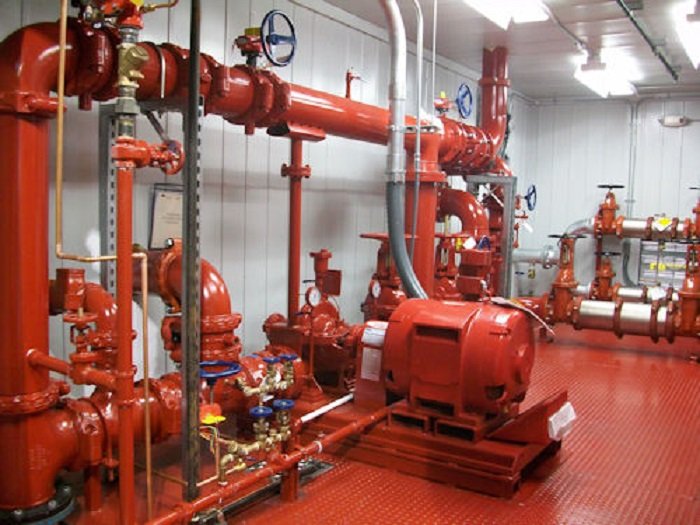
3 tips for Fire Pump maintenance

A fire pump is an essential element in your sprinkler system. Therefore, it’s crucial to ensure that it is always maintained and in a good working condition. Fire pump is important for maintaining equal pressure at each sprinkler head in the system. If the pump is not working, the entire sprinkler system is at risk of failure. Since your sprinkler system is not running on a regular basis, you won’t know when there’s a problem unless you take the time to maintain and inspect the fire pump.

  1. Power Source

Your fire pump needs power, which may be an engine or an electrical motor, and that power source should be checked at least once a year. The power source should also be cycled once or twice a year in addition to a routine inspection. Cycling enables you to maintain lubrication and allows inspection of the running system, and will also assure you that there is fuel available for the power source.

2. Move Parts

To ensure everything is moving freely, conduct maintenance and inspections on the fire pump while uncoupled from the power source. Use the appropriate lubricants on all moving parts and take the time to move them around to keep them from locking in place. A fire pump is meant to last for many years, but without proper maintenance, it could seize and lock into place, resulting in a major fire safety risk for your building.

Also read: Boosting pump efficiency, reducing maintenance costs

3.Test Controls

Take the time to test random sprinkler heads that should trigger the system once a month. However, before testing, always notify the fire department and monitoring company to let them know you are just testing and there is no emergency. Also, silence all alarms to avoid scaring your employees with the drill. While implementing these tests, do a visual inspection of the system and sprinkler heads to look out for any obvious repairs.

Fire pumps can be an expensive addition to your sprinkler system but again they are absolutely necessary in the absence of a sufficient water supply.
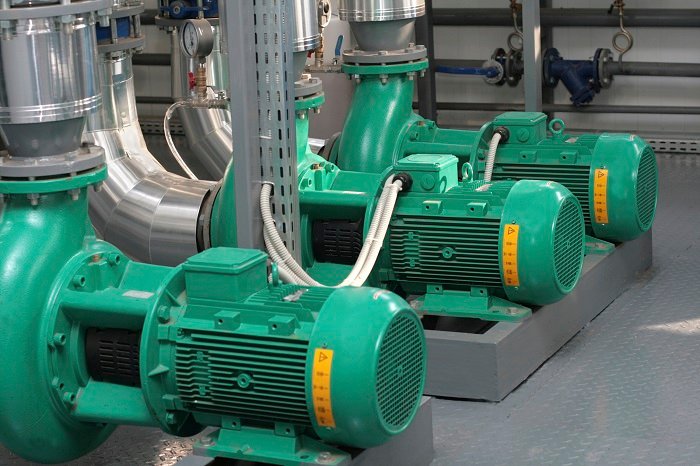
Boosting pump efficiency, reducing maintenance costs

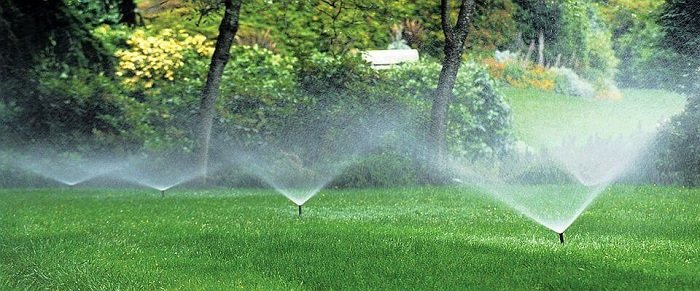
6 easy steps to get the perfect sprinkler pump

All pumps are not created equal.When choosing a sprinkler pump, figuring out the difference between one sprinkler pump from the other can get frustrating. However, consider the following easy steps to get the perfect sprinkler pump to match your needs:

1. Sizing your sprinkler pump properly

Figure out how many sprinkler heads you have along with their GPM (gallons-per-minute) and PSI (pounds-per-square-inch) requirements, in order to determine the correct sprinkler pump size.

Sprinkler heads are rated at a specific GPM and PSI. Perhaps, you will use sprinkler heads of the same GPM and PSI rating throughout your system, if so, then the PSI will remain the same.

Do not oversize your pump too much, doing so could blow out your sprinkler heads or cause a sporadic and disorganized spray pattern.

2. How High Are You Pumping?

Another important factor to consider when planning to install a sprinkler pump is the amount of lift required to move the water from its source to your pump. The “suction head” must be less than 25 feet high, but ideally it should be not more than 5 feet high.

Measure the distance from the surface of the water source straight up until it meets the elevation of your pump, to determine the suction head requirements of your sprinkler irrigation system, . That’s your suction head. It’s best to install your irrigation pump as close to the water source as possible without risking water-damage to the pump, given that, it’s much easier for a pump to push water out than to pull water upward.

3. How far are you pumping?

Considering the suction head, you’ll as well need to consider how far you’re pumping the water so as to reach your sprinkler heads. The distance in which you’re pumping the water can affect the water pressure.

In this case if the distance from your pump to the furthest sprinkler is under 100′, the standard 1-1/2″ discharge pipe will work. But, if the distance to your furthest sprinkler head is 100′-300′, you’ll need to go to a 2″ discharge pipe instead.

If the distance from your irrigation pump to your furthest sprinkler head is 300′-600′, you’ll need to increase the diameter of your discharge pipe to 2-1/2″.

Basically, you need to increase discharge pipe diameter by one size for every 300′ of horizontal pumping distance in order to maintain the best possible flow and pressure.

4. Power requirements

You’ll need to be sure you have the correct power supply. Most pumps are dual-voltage rated, that means, they will operate at either 115 volts or 230 volts. Nonetheless, some of the larger pumps are 2-1/2 HP, 3 HP, and are rated at 230 volts or 208/230/460 3-phase. An alternative option to electricity is a gas-powered pump. However, depending on your requirements, you may require a high pressure gas pump.

5. Priming method

Most pumps are self-priming, however, at time they may require priming by filling the priming port and pump housing with water upon initial installation to force any air out and allow for the impeller to start sucking water.

Any air pockets left in the lines or the pump will cause the pump to become air-bound. An air-bound pump will not operate properly until the air is removed and replaced by water. As long as a check or foot valve is installed on the suction pipe, and you never lose suction, you should not need to re-prime the pump.

6. Choosing a location for your sprinkler pump

Sprinkler pumps are not designed for suction head over 25 feet, install them as close to the water source as possible. Additionally irrigation pumps are not capable of sucking water beyond 25 feet above their water source. Consider a different type of pump, if you have to locate your pump higher above the water source.

Be sure to protect your pump from the elements. Your sprinkler pump should be located in a cool, dry area where it won’t get rained on, but will still have optimal ventilation. Keep the pump dry, keep it out of direct sunlight, and keep it well ventilated so it doesn’t overheat or become flooded.

You cannot copy content of this page

Please contact editor@old.pumps-africa.com.
