Industrial Pump Maintenance tips
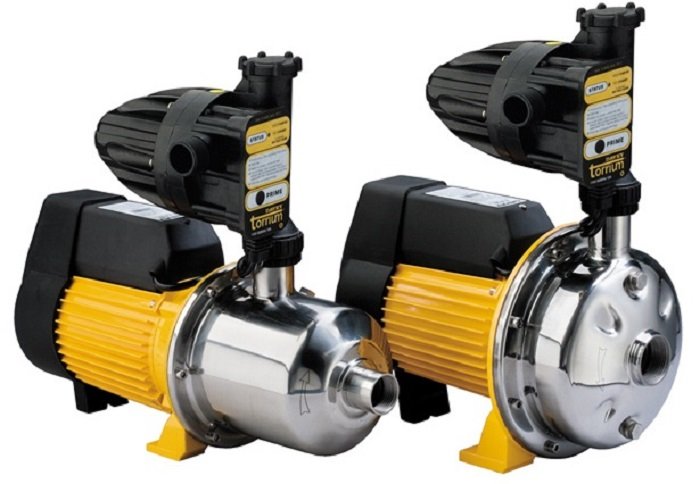
How to install a water pressure booster
Installing a water pressure booster pump is important if you want to increase water pressure and the volume available to your system, or increase the pressure but at a lower flow.
To get the water pressure booster pump running, install as follows:
- Turn off incoming water and RO storage tank valve. Open the ledge faucet and keep it open to relieve pressure.
- Position the pump so that the inlet tube. The 1/4 tube that supplies water to the RO unit — can be routed through it. Observe the directional arrows on the quick-connect fitting ports at the front of the pump, cut the inlet tube squarely and insert the ends into the appropriate ports.
- Cut the 1/4″ tube that connects the tank to the unit squarely and insert the pressure switch so that the tank water will pass through the switch. Flow direction does not matter.
- Connect the electrical wires from the pump and the transformer into the switch. The electrical connection will only go one way. If the connections fit, you’ve got it right. This switch will shut the pump off when tank pressure reaches 40 pounds.
- Turn the inlet water back on and check for leaks. The unit should now start producing water through the open ledge faucet. Plug in the pump. The pump should come on and water production from the ledge faucet will increase.
- Reconnect the tank to the system by turning on the valve on top of the tank, then close the faucet and the unit is now in operation. The pump will turn off automatically when the tank is full and resume operation when water is taken from the tank.
Tips on how to save energy on pumping systems
When involved in water business and you need to move the water, you need pumping systems. Water is not easily moved. To do so you requires tremendous energy. Below are 10 ways on how you can save your energy:
Select the most efficient pump type for the application
An average pump efficiency is below 40%. However, 10% of pumps are 10% efficient or less. Over-sizing often comes in the design phase, since the practice for adding multiple safety factors is quite common. This means that both pressure and flow parameters for the pump design may be 25% more than the actual system operation. The specifying engineer may need to work closely with the pump manufacturer or distributor to optimally select the pump, in addition to its size, power requirements, speed, and type of drive, as well as the ancillary equipment and the mechanical seal.
Pump right-size
Pump size matters given that, pump represents a significant economic opportunity to reduce energy consumption. This is important because centrifugal pumps can consume up to 60% of motor energy in a facility, and have the highest process equipment maintenance cost. When engineers add too much of a safety factor during the design phase, the pump can be oversized, resulting in higher energy and maintenance costs.
Trim the impeller
The impeller should not be trimmed any smaller than the minimum diameter shown on the manufacturer’s pump curve. This is typically about 75% of a pump’s maximum impeller diameter. Pump curves and affinity rules can both provide information on impeller trim changes and the affected performance. Actually, impeller trimming is typically used to avoid throttling losses associated with control valves.
Also read:Boosting pump efficiency, reducing maintenance costs
Minimize system pressure drop
A key way to reduce pressure drop is through pipe-sizing optimization. Hydraulic friction loss creates a reduction in pressure from one end of a straight pipe to another. Factors such as the pipe size (pipe diameter), overall pipe length, flow rate, pipe characteristics (surface roughness, material, etc.), and properties of the fluid being pumped all influence the system pressure drop.
Implement proper control valves
The main functions of control valves are throttling flow or for bypassing flow. Throttling reduces the flow but increases the pressure. You can minimize excess pressure by bypassing excess flow back to the reservoir or another location. Control valves are also used to control flow and/or pressure as well as reducing energy losses over non-controlled systems such as irrigation systems with a fixed-speed pump and multiple locations with different distances and elevations.
Implement variable speed drives (VSDs)
For many applications, you can save energy by implementing variable speed drives. With a variable speed drive, the rotational speed of the pump is adjusted to achieve the desired head and flow necessary for the process application. Drivers either be used on fixed-speed or variable-speed operation.
However, a VSD can often be added to an existing pump motor system to slow the pump down to meet the actual requirements verses the theoretical requirements that were calculated at the start of the project. Once installed, the VSD can accommodate changing system demands, including many potential future expansion plans. This method often results in the highest energy efficiency with lowest life cycle costs.
Maintain pumping systems effectively
Regular maintenance may reveal deteriorations in efficiency and capacity, which can occur long before a pump fails. Effective pump maintenance allows facilities to keep their pumps operating efficiently. Wear ring and rotor erosion, for example, can be costly problems that reduce efficiency by 10% or more. Most maintenance activities can be classified as either preventive or predictive. Preventive maintenance addresses routine system needs such as lubrication, periodic adjustments, and removal of contaminants. Predictive maintenance focuses on tests and inspections that detect deteriorating conditions. However, it has become easier to conduct with modern testing methods and equipment. This can help minimize unplanned equipment outages, which can be very costly.
Use higher efficiency/proper pump seals
Sealing systems impact efficiency, and mechanical friction losses are only the beginning. Leaks from static and dynamic seals waste fluid and can contaminate the environment. Leaks between the pump suction to the pump discharge reduce pump volumetric efficiency. Dynamic seals consume energy from the mechanical friction between the static and moving parts. Potential sealing system savings can exceed the energy savings obtained from switching to variable frequency drives, trimming impellers, or re-sizing pumps in many applications.
Also read: Understanding Your Pumping System Requirements
Use multiple pumps
There are opportunities for significant energy savings when multiple pumps operate as part of a parallel pumping system. A multiple parallel pumping system works best when each pump runs individually, not concurrently. Running multiple pumps simultaneously is appropriate as dictated by the flow requirements specific to the application and duty cycle.
Eliminate unnecessary uses
Each pump system is different and there are many opportunities to save energy. One of the most simple, but often overlooked, measures to save energy is to eliminate unnecessary use. Pumping system efficiency measures include shutting down unnecessary pumps and using pressure switches to control the number of pumps in service when flow-rate requirements vary.