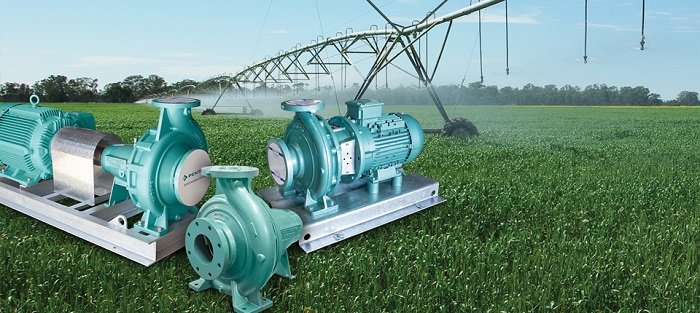
5 Factors to consider when choosing irrigation pump

Irrigation pumps are usually used to pump water from a lower to a higher level from which the water then flows through channels to the fields requiring irrigation or to raise it to the required pressure head in order to spray the fields via piping systems (sprinkling). The heads involved range from approx. 1 m for normal lift operation to 40 m for sprinkling. Ocassionally, heads more than 100 m may be required.

At times, irrigation pumps are usually not equipped with variable speed drives. The flow rate can therefore be controlled by either switching the pumps on and off, or by using a throttling valve in the discharge pipe, pre-swirl control (e. g. cooling water pumps), rotational speed or impeller blade pitch adjustment. Both horizontal and vertical pumps (e. g. tubular casing pump) are used as irrigation pumps.

For more than 2,000 years farmers have used irrigation to grow food for the world. However, this does not mean that all irrigation methods are equally useful. Knowing what will work best in your situation requires knowledge about the options available, including the advantages and disadvantages of each. With that in mind, here is a look at five things to consider in getting water to your crops:

1. Soil type. The type of soil in an area can affect not only the type of irrigation method used but also the irrigation run times. Sandy soils typically require frequent applications of water at a high rate to keep moisture in the root zone. Clay soils has a characteristic of holding moisture longer that sandy soils, even so, this may require frequent applications at a lower rate to prevent runoff.

2. Land topography. When it comes to land considerations, hilly or sloping land can be a challenge. Drip irrigation works well if the laterals can be run along topographic lines. Often system run times may need to be adjusted to prevent runoff. Travelers and center pivot systems are usually out of the question on hilly and severely sloping land.

3. Local weather patterns. In this case, sprinklers are less desirable in areas where high winds are common and in arid areas with a low humidity since water losses due to evaporation can be extremely high. Drip irrigation works well for both of the above mentioned situations.

4. Type of crops grown. Sprinkler and drip systems can require high levels of investment. Therefore, it’s better to reserve their use for high-value crops like vegetables, small fruits and orchard crops rather than applying them to commodity crops like wheat and soybeans.

5. Water quality. All drip irrigation systems require some type of filtration. Overhead systems such as sprinklers seldom require filtration. Irrigation water should be tested for water borne pathogens. Depending on the crop grown and irrigation method used chlorine injection may be required. Other water quality issues that could be of concern include levels of soluble iron and other dissolved minerals.

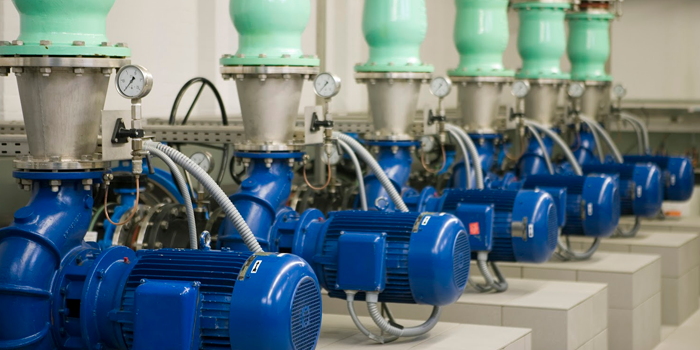
 

Safety tips for centrifugal pump


One of the most popular types of pumps used both domestically and in industrial settings, are Centrifugal pumps. They come in various designs and at high velocity and pressure; they all work in a similar manner. Unanticipated accidents may occur when using such pumps, and to avoid them, as well as avoid damage to a pump, the following are some safety tips that should be followed.

  1. Read and Follow Instruction Manual.

Before you installing the pump, always ensure you read the instruction manual that comes with the package. Check for the recommended specifications for pump components in the manual before making adjustments, operating, or performing any maintenance on it or its related equipment.

  1. Avoid Overheating.

Overheating not only damages the internal components but also could cause accidents in the form of severe burns and injuries to anyone servicing the pump. To avoid overheating, always leave the suction and discharge line open during operations.

In a case where overheating occurs, stop the pump immediately and allow it time to cool down. You can then vent the pump at the drain plug, slowly and cautiously, before restarting and also allowing an overheated pump to cool to air temperature before removing the cover plate, gauge port plug, or fill port cap.

  1. Watch-out for Worn-out Components. 

Checking for worn-out components and replacing them immediately is a sure way of avoiding catastrophic damage to your pump. A good example is when the pumps bearing is worn out, the shaft loosens and begins to wobble causing it to become noisy and eventually overheat. One should also check for worn suction line fittings and pipe plugs, and ensure there are no impurities and solids such as sand that may cause scratches and rapid wear of seal faces.

  1. Check for Air Leaks.

Using a vacuum gauge, always make sure the suction line is airtight by regularly checking for air leaks. Worn-out suction line fittings and pipe plugs tend to have air leaks. This can cause the pump to lose its static lift.

Usually, when shut down, a centrifugal pump’s vacuum gauge reading will display the vertical distance from the product level to the gauge tap and if the suction pipe is not airtight, atmospheric pressure will find its way in. This will cause vacuum fall-off after shutting down. The vacuum gauge will show a reading error or a fluctuation in readings, which is an indication of wear and tear that needs replacement.

Also Read:5 tips on water pump maintenance

  1. Check for Blockage.

When the rubber lining in a suction hose separates or pulls away from its fabric, partial blocking of the suction line can occur. This may lead to a blockage of the suction flow which may cause the pump to develop a high vacuum and a low discharge pressure. Watch out for this suction hose problem by checking the vacuum gauge readings during operations. Be on the lookout for readings that are higher than normal.

  1. Routine Maintenance.

Carry out routine maintenance to check the pump’s engine or motor is getting the necessary power to operate efficiently, and checking whether it needs tuning or servicing, is better than waiting till tear and wear occurs. Maintenance of all the pump’s components is also very important.

A maintenance check should be performed preferably every six months, or more often depending on the usage. Inspection and cleaning should be done frequently to keep off the accumulation of debris which may cause clogging of the strainer, and obstruct the flow through the strainer.

  1. Perform a Shut-off Test.

A shut-off test is done by starting the pump and allowing it to achieve full flow before slowly closing the discharge valve and recording the discharge as well as the suction gauge reading. This test inspects the components and measures the internal wear of the centrifugal pump.

  1. Check Discharge Lines.

It is important to always check the operating condition of your discharge line. The older the discharge lines, the more prone they are to rust, internally.

  1. Be Cautious.

Be cautious to avoid accidents. Always ensure all the guards and shields of the pump are in place before starting operation and when the pump is in operation, approach it with utmost caution.

  1. Pump and liquid proximity.

Making the centrifugal pump accessible, and as close as safely possible to the liquid being pumped, is by locating them closer but not within three feet of other equipment. Ensure the pump is stable during operation.

  1. Use the Pump for Its purpose only.

Pumps are designed for different uses and each has its role or purpose never use a centrifugal pump to pump liquid that it’s not designed to pump. For instance, flammable and corrosive liquids should not be pumped using water-pumps.

  1. Experienced Personnel Only.

Only skilled and experienced and authorized persons should operate a centrifugal pump. Also, do not remove warning tags or labels from the machinery. Loose clothing around the machinery should be avoided and appropriate safety gear must be provided.

Understanding Your Pumping System Requirements


Pumps are used to transfer liquids from one point to another. They convert mechanical energy from a rotating impeller into pressure energy (head).

The pressure applied to the liquid forces the fluid to flow at the required rate.

This also helps the fluid to overcome friction (or head) losses in piping, valves, fittings, and process equipment.

The pumping system makers are forced to consider fluid properties, determine end use requirements, and understand environmental conditions. These considerations are the pumping applications which  include constant or variable flow rate requirements, serving single or networked loads, and consisting of open loops (non-return or liquid delivery) or closed loops (return systems).

Fluid Properties

Pump choice can significantly be affected by the properties of the fluids being pumped

Key considerations include:

  • Acidity/alkalinity (pH) and chemical composition.

Corrosive and acidic fluids can degrade pumps. This should be put to consideration when selecting pump materials.

  • Operating temperature

With pumped fluids that are hotter than 200°F, pump materials and expansion, mechanical seal components, and packing materials need to be considered.

  • Solids concentrations/particle sizes.

When pumping abrasive liquids such as industrial slurries, selecting a pump that will not clog or fail prematurely depends on particle size, hardness, and the volumetric percentage of solids.

  • Specific gravity.

The fluid specific gravity is the ratio of the fluid density to that of water under specified conditions. Specific gravity affects the energy required to lift and move the fluid, and must be considered when determining pump power requirements.

  • Vapor pressure.

A fluid’s vapor pressure is the force per unit area that a fluid exerts in an effort to change phase from a liquid to a vapor, and depends on the fluid’s chemical and physical properties. Proper consideration of the fluid’s vapor pressure will help to minimize the risk of cavitation.

The viscosity of a fluid is a measure of its resistance to motion. Since kinematic viscosity normally varies directly with temperature, the pumping system designer must know the viscosity of the fluid at the lowest anticipated pumping temperature. High viscosity fluids result in reduced centrifugal pump performance and increased power requirements. It is particularly important to consider pump suction-side line losses when pumping viscous fluids
