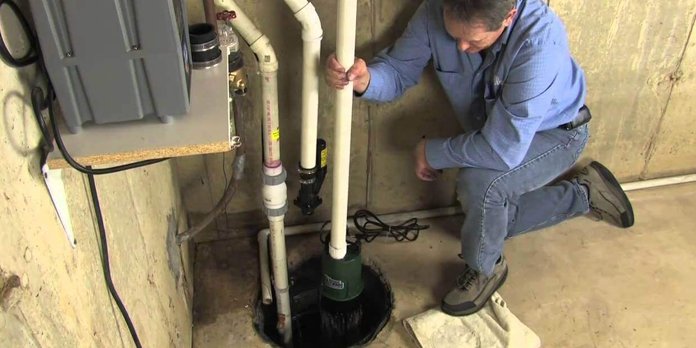
How to select the best sump pump


Homes with basements and low water tables are in need of sump pumps. These help in discharging water so as to prevent damages. The sump pump is easily installed with household tools.

Choose between an automatic or manually operated sump pump based upon the amount of water that requires removal.

Base Type

Sump pumps come either with stand mounts or are submersible. The former sump pump uses a float system to turn the pump on and drain water from the area. It is also is cheaper when compared to a submersible pump.

However, it must also be mounted so as to prevent the motor from getting wet. On the other hand, the submersible feature of the latter makes it ideal for a basement area that floods during the rainy season. Submersible pumps make minimal noise- if at all.

Furthermore, they last longer than the pedestal-mounted pumps and are safer in homes with children.

Also Read: Why every homeowner needs a sump pump

Horsepower

The sump pump horsepower determines lift and the amount of water removed per hour. As such, be sure to select a pump with the area of water in mind. For instance, a pump with a greater distance to discharge the water will require more horsepower for the same.

Notably, most basements in standard homes require a sump pump with 1/3 horsepower. Review the specifications of each sump pump to select the one that meets your needs. This information is mostly found in the manufacturer’s documents that come with the sump pump upon purchase.

Capacitive Switch

The sump-pump switch regulates the sump pump, turning it on or off.  Basically, go for a pump with a capacitive switch. This will help in hassle-free automatic operation. Sump pumps come with a variety of switches for this purpose. Some sump pumps operate automatically, while others must be turned on manually.

Pumps equipped with capacitive switches have a chip that measures the water level. This turns the pump on when the water reaches the preset level in the sump basin. Moreover, a capacitive switch does not have any mechanical parts that wear out. This guarantees durability of the same.

Other Switches

Select a sump-pump with a perpendicular switch that mechanically turns the sump pump on or off automatically. Such switches move vertically to turn the sump pump on at a preset level. A pump with a vertical switch fits in small places. However, it must be free of obstructions. Another switch type is the diaphragm switch which uses the water pressure level to send a signal to the pump.

Durability

Choose the sump pump with resistant housing materials. This is because water will rust the pump housing if it is not made from bronze, stainless steel or iron covered with an epoxy. Before choosing a sump pump, measure the height of the lift and have this information available. The height of lift determines the head pressure to remove water vertically.


How a heat pump works

An industrial heat pumps with screw compressors

A heat pump is a device that can be used to either heat or cool a place. The pump does not produce heat, instead it only acts as a conduit for the same from one place to another. It operates more or less the same way an air conditioner does.

A heat pump is basically a heat transporter, as it transports heat to or from where it may or may not be needed.

Heat pumps utilize a working fluid called a refrigerant. This is selected based on its useful physical properties during the different stages of operation inside a heat pump. The refrigerant is then circulated through the heat pump.

A compressor drives this process. The refrigerant enters the compressor, in a saturated vapor state at lower pressure and temperature while exiting at higher pressure and temperature. This will be in a super-heated gaseous state. The refrigerant then passes through the hot side heat exchanger, and in so doing changes state into a liquid.

Next, the heat loss of the gas is then transferred out of the heat exchanger and into whatever medium the heat exchanger is in contact with. The refrigerant then passes through an expansion valve.

Also Read: When to repair or replace your pool pump

This movement forces the liquid refrigerant to flash into a gas and liquid mixture. This will be at a lower pressure and temperature compared to when it was prior to entering the valve. This mixture then passes through the cold side heat exchanger.

At this time, the refrigerant completely converts into a gas. The heat produced after the mixture evaporates is absorbed by the heat exchanger from whatever medium the heat exchanger is in contact with. The refrigerant then enters the compressor, marking the beginning of another cycle.

A heat pump spells efficiency in how it is able to transport more heat energy than the energy required to run it. Alternatively, it can also be used as a heater instead; making it more of a heater than an air conditioner.

However, to have 100% efficiency, you have to be operating between certain temperature ranges. For instance during extremely cold weather, the heat pump will not be as efficient a heater. This is because the extreme cold conditions make it hard for the pump to extract heat from the outside. So much so that eventually, the heat energy transported becomes equal to the electrical energy input. This, in turn, increases the cost of heating.

Similarly, a heat pump working as a cooler will not be as efficient when working under extreme temperatures. Fortunately, extreme heat that impede the work of a heat pump are rare. Basically, the greater the temperature difference you are working against, the more energy it takes and the less the desired effect in return.


What you need to know when installing a Sump pump


Sump pump installation is so easy that you can do it on your own. So much so that you do not need to enlist the services of a professional plumber. However, it will do you good to know that there are several different types of sump pumps, each with a differing set of installation instructions.

The pump is set in a basin, otherwise known as a sump pit. This is to be located at the lowest spot in the basement floor. Alternatively, place it where water first accumulates. Sump pits can be purchased at home centers. As the water level beneath the basement floor rises and fills the pit. This, in turn, activates the pump and initiates the discharge of water outside.  Once the water level falls, the pump shuts off.

Types of Sump Pumps

There are two types of sump pumps usually installed in houses: submersible pumps are fully concealed in the sum pit. On the other hand, pedestal pumps are only partially concealed, with the motor resting above the water.

Sump pumps have long cords. This allows you to plug them into a receptacle that is protected by a ground fault circuit interrupter. However, be careful not to use an extension cord with a sump pump unless it matches the recommendations of the pump manufacturer.

Also Read: Why every homeowner needs a sump pump

Digging a Sump Pit

If you want to install your own sump pump, plan to spend $300-$500 for materials. You will need a jackhammer to break through the concrete. Electric jackhammers are easy to use and can be plugged into regular household outlets.

Next, set your sump basin upside down on the floor, draw a circle about 4 to 6 inches outside the perimeter of the basin while making sure a distance of at least 10 inches from the walls. This is to avoid the foundation footing. Once this is done, use the jackhammer to break through the slab along the line.

Dig the hole to the required depth; the top of the basin should be at the same level with that of the floor.  Set the basin in the hole and fill the gaps around the perimeter. This should be done with gravel, to a level approximately 1 inch above the bottom of the floor slab. The reminder of the perimeter gap should be filled with concrete. Smooth the surface of the concrete and allow to set for at least a day.

Installing the Sump Pump

The sump pump should be set in the basin as directed by the manufacturer. Connect the check valve and attach PVC discharge piping. Run the piping up the wall and out through a hole you drill in the rim joist.

Make sure to extend the piping to the outside. This will allow the water to drain away from the foundation. However, if the mark is not suitably sloped away from the house, you may need to install a dry well outside of the discharge piping to empty into. Cover around the hole in rim beam with a waterproof seal. Now plug the sump pump into the receptacle. Finally, be sure to fill the basin with water and test the pump.
