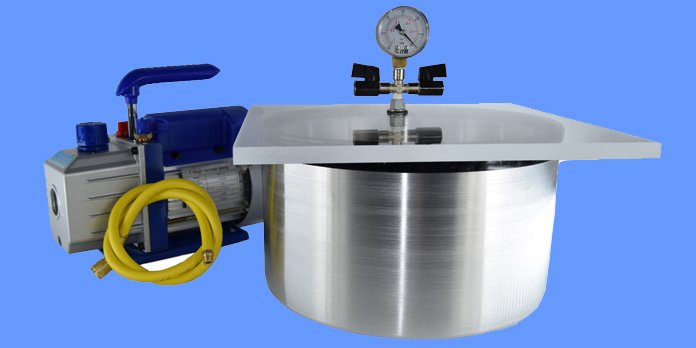
How a vacuum pump works


A vacuum pump is a device which induces pressure difference between two regions of space. Creating a vacuum in a system requires moving all molecules of gas out of the system. However, molecules will only move if there is a difference in pressure between the low and high pressure regions.

There are two types of vacuum pumps, a transfer and a trapping pump.

The transfer pump, also known as a kinetic pump, transfers gas from the inlet of the pump to the outlet. This is achieved by a rotating part of the pump. The rotation accelerates the movement of molecules of the gas, thus creating a region of low pressure.

Also Read: How a heat pump works

Once the pump reaches its vacuum capacity any exchange of gas between the container and the pump is stopped by a valve.

On the other hand, the trapping pump, otherwise referred to as a capture pump, is usually located in the container being evacuated. The pump works by removing the gas molecules through condensation on the internal surface.

Basically, should the gas molecules come in contact with the refrigerated surface of the pump, the gas is then condensed and removed as a liquid.

Vacuum pumps can be damaged over time. As such, basic maintenance is a requirement in order to keep the equipment running and in good condition.

How to install and operate a swimming pool heat pump


A heat pump is undoubtedly the most cost efficient method available for heating swimming pools. As such, ensure you enlist the services of a licensed electrician or natural gas professional. This is to ensure the pump is installed properly and safely.

Furthermore, pool heater models have varying guidelines in regard to proper clearance and ventilation and all manufacturer specifications should be strictly adhered to.

Proper installation and maintenance could see your pool pump serve you for well over five years.

Installing a heat pump

Heat pumps need plenty of air circulation and work best outside with plenty of clearance. The pump should thus be placed on level ground near a pool pump or filter. You should also ensure that air flow is restricted. Alternatively, consult the owner’s manual which has details specifying proper clearance, placement as well as the ideal location of the unit.

Install the heater as close to the filter as possible and approximately 25 feet away from the swimming pool. Installing the unit any further may result in heat loss since tubing is underground.  Technically, an “ideal” installation will have about 24″ of clearance around the unit with no obstructions above.

Also Read: How a heat pump works

Operating a heat pump

Every pool heat pump has different controls.  Ensure that all valves are open to allow water flow into the pump. It is also important to note that the heat pump only runs if your water pump is running.

The air being exhausted from the top should always be cooler than the ambient air as an indication that the pump is in good working condition. On the other hand, sometimes the pump will still run even after the water pump has been shut off.  This happens if the heater is set well below the water level of the pool or the flow switch needs to be adjusted.

Most heat pumps shut down below 50 degrees Fahrenheit and start up again once the temperature becomes favorable.  A solar blanket can be used on the water to improve the performance of the heat pump during cool days.


Top 5 best Sump Pumps


Sump pumps serve an important function for homeowners. As such, you should always ensure that you have the best and safest model available. This applies mostly to those living in a damp area.

An electrically-powered sump pump is usually capable of taking care of a flooded area. However, a back-up pump becomes more ideal for situations where the lights are prone to go out. The battery-powered sump pumps immediately begin to work when the power goes out. Furthermore, a fully-charged battery-powered sump pump can run for up to eight hours.

  • Superior Pump 91250

Superior Pump’s 1/4 HP thermoplastic submersible utility pump is Amazon’s top-selling sump pump. However, the Superior Pump 1/4 HP thermoplastic submersible utility pump may only be used as a sump pump after the homeowner adds an optional float switch.

The Superior Pump 91250 pumps up to 30 gallons per minute. Furthermore, water can be lifted up 25 feet vertically. It can not only be submerged repeatedly without corroding, but it can also fit in small openings. The pump also offers continuous pumping with clog-resistant suction and water intakes on the side and bottom of the unit

  • WAYNE CDU980E

The WAYNE CDU980E 3/4 HP submersible cast iron and stainless steel sump pump with integrated vertical float switch minimizes air locks and clogging from debris. There is also a vertical float switch which has been tested to 1 million cycles. The sump pump has a flow rate of 4,600 gallons per hour and is designed for 11-inch diameter and larger sump pits.

Also Read: How to select the best sump pump

  • Zoeller M53

This particular sump pump is often a top choice of plumbers and contractors. It has an engineered thermoplastic base and a glass-filled, plastic impeller with a metal insert. Some of the features that stand out are the stainless steel guard and handle. The pump is float-operated, submersible and has a 2-pole mechanical switch. It also boasts of long-cycle systems as well as a variable level.

The Zoeller M53 has a corrosion-resistant, powder-coated epoxy finish with no screens to clog. Furthermore, the entire unit is pressure-tested after assembly to ensure durability.

  • Liberty Pumps 257

With an efficient motor design, the Liberty Pumps 257 1/3 HP cast iron automatic submersible sump/effluent pump reduces electrical usage by up to 40%. It also has a heavy-duty, cast iron pump with a powder coat finish. This feature enables it to pump up to 50 gallons per minute.

Liberty Pumps 257 has a one-piece cast iron body with a quick-disconnect power cord. There is also a Vertical magnetic float (VMF) design for smaller pits. This is in addition to being durable and having epoxy powder coat finish. This makes it suitable for basement dewatering.

  • Flotec FPPM3600D

The Flotec 1/3 HP pedestal sump pump is capable of pumping up to 3,480 gallons of water per hour. A heavy-duty, rugged 1/3 HP motor and unique pedestal design are two standout features. Flotec FPPM3600D has a top-screened inlet with 1-1/4″ discharge. The impeller is also anti clogging with a long lasting thermoplastic construction

The features and capabilities offered by sump pumps provide homeowners with peace of mind during rainy seasons or when a home water disaster strikes. Consumer reviews and consultations with qualified plumbers are a reliable means to use in determining the best sump pump for your needs.