How to avoid pump packing failure


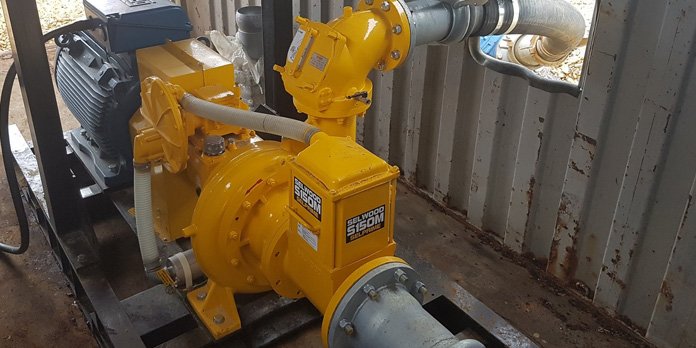
In pumps, mechanical seals are usually used to seal the equipment. Nonetheless, there are still a number that make use of compression packing for sealing purposes. These pumps are used across a wide range of industries and play a critical role in supporting various industrial processes.

Failure of compression packing as well as subsequent pump failure has been proven to disrupt process operations. This, in turn, has resulted in unexpected plant downtime and significant financial losses. Additionally, additional labor is required for cleanup in these situations. As such, it goes without saying that a pump user needs to be fully aware of the steps that ought to be taken to ensure smooth, efficient pump operations.

Packing failure can be caused by a number of different factors. Some of these are as simple as the wear and tear induced by normal operations. Moreover, the improper choice of materials and lubrication is also liable for mechanical damage and subsequent packing failure.

Also Read: Top 3 hydraulic equipment maintenance mistakes to avoid

More often than not, adjustable packing can fail as a result of excessive gland tightening. The misalignment of plunger and pistons, as well as dirty or corrosive liquids or environmental factors can also contribute to packing failure.

Signs of Packing Failure
Packing failure can be detected by a number of different indicators. For instance, it’s common for failure to be accompanied by increased leakage. In other instances, users may no longer be able to control leakage, leaving the baseline drip rate unable to be regulated using normal gland follower adjustment.

Other signs of failure include smoke inside of the stuffing box, or packing protrusion outside of the pump. Furthermore, routine maintenance makes it possible to assess the state of packing material. This will help determine its state, whether brittle or otherwise.

Packing Maintenance
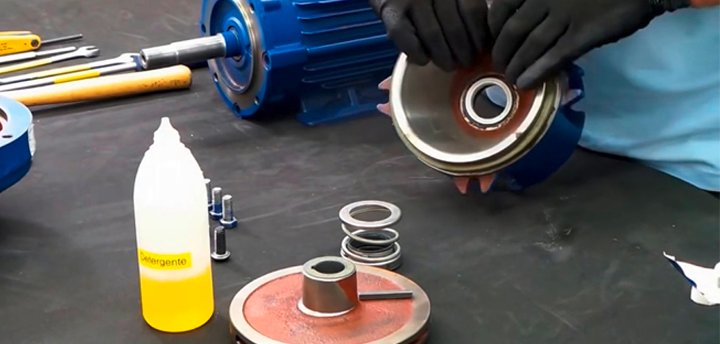
In the event of packing failure, it’s essential to rectify the problem by removing the old packing and replacing it with new material. This then follows that the end users be familiar with the specific safety and environmental regulations involved. As such, any degraded material should be replaced, and the cavity and stuffing box thoroughly cleaned before repacking. Smaller parts that may be damaged should also be replaced before the plunger is reinserted with sufficient lubrication.
Top 3 hydraulic equipment maintenance mistakes to avoid


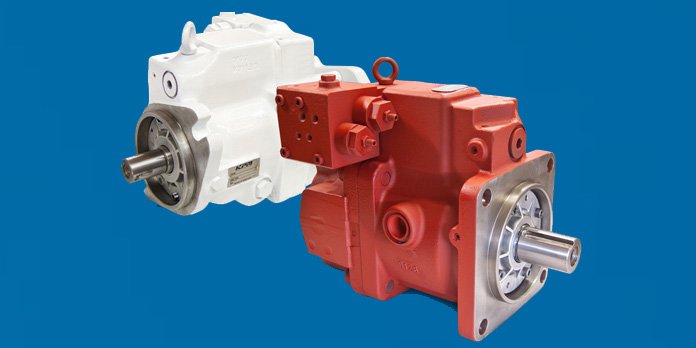
A hydraulic pump is a device that converts linear motion to hydraulic energy. The fluid, upon exiting the pump will have a higher velocity and pressure than at entry.

It must be noted that the pump does not produce pressure but flow, it has the ability to do this at elevated pressures.

Hydraulic pumps are used in a wide scope of engineering fields. They are also available in a variety of designs. This is such that each type is fitted with a different internal mechanism based on the same fundamental principles.

Common mistakes
Here are some common mistakes that end users tend to make when it comes to proper maintenance practices of the hydraulic pumps.

Oil Change
It is important to note that there but two conditions that warrant a hydraulic oil change: degradation of the base oil or depletion of the additive package. As such, before changing the oil based on hours of service, one should be sure to refer to the actual condition of the oil. This can be achieved through a comprehensive oil analysis.

On the other hand, it is best to ensure that the oil is viscous. This is because viscosity is a vital feature for the oil as it affects both pump performance as well as life cycle of the same.  Oil viscosity largely determines the maximum and minimum oil temperatures within which the hydraulic pump can safely operate.

Also Read: These factors will help you minimize total pump life cycle cost

For instance, using oil with a viscosity that’s too high for the climate under which the machine operates will hamper oil flow as well as lubrication. Similarly, using oil that is too thin will not meet the minimum viscosity requirements as well as adequate lubrication.

Filter change and location
Just as oil changes require the utmost accuracy, changing the filters should be equally important. This is because changing the filters based on schedule negates the necessity of accuracy. As such, filter changes should be made when all their dirt-holding capacity is used up, but before the bypass valve opens. This thus requires a mechanism to monitor the pressure drop across the filter element. It should alert the end user once this point is reached.

That being said, there are filter locations that are wrong and as such tend to do more harm than good and can rapidly destroy the components they were installed to protect. These are the pump inlet and drain lines.

Overheating
Few equipment operators continue to operate an engine that is overheating. Unfortunately, this is not the case when the same happens to a hydraulic system. Furthermore, just like an engine, the fastest way to destroy a hydraulic pump components, seals, hoses and the oil itself is high-temperature operation.

Be as it may, the average temperature range is highly dependent on the rate of change in viscosity with temperature of the oil, as well as the type of hydraulic components in the system.

These three are only some among the many mistakes which are made by pump equipment operators and that end up giving them a run for their money when they breakdown as more often than not one is forced to acquire new equipment.

These factors will help you minimize total pump life cycle cost


In pumps, the total pump life cycle cost is gotten by adding ongoing and periodic costs to the buying equation. The LCC method used to determine total cost of ownership is usually practiced more by industrial than municipal users.

These days, inasmuch as many wastewater treatment plants may feel pressured to buy equipment based on the lowest acquisition price, buyers are increasingly measuring the value of quality and service by adding ongoing and periodic life cycle costs to the buying equation.

Identifying Pump Life Cycle Costs
LCCs are categorized into three; acquisition, annual and periodic. However, some factors are easier to determine than others. Be that may, that should not negate the importance of any of them. Furthermore, LCC analysis may not be an exact science, but it is way better than sole reliance on  acquisition costs.

Operational Cost Saving Strategies
There are a number of strategies that rotary lobe pump end users in particular can adopt to reduce costs. One of such is the selection of a manufacturer that sizes correctly for the long term.  Secondly, one should be sure to purchase a variable frequency drive (VFD). This will enable the user to ramp up speed to maintain output rather than buying wear parts prematurely.

Furthermore, some experts say it is often wise to purchase slightly larger pumps than might be necessary for a desired flow. This is especially the case when it comes to abrasive fluids as it will go a long way towards saving money on parts by running them at slower speeds.

Also Read: Working principle and maintenance of Peristaltic metering pumps

Effective cost saving strategies should also take into account the exponential relationship between rotational speed and wear. As such, the user should make sure to track each pump’s efficiency. This can be achieved by ensuring it is on the right side of the trade-off between replacing wear parts versus higher energy costs associated with running pump motors at higher speeds.

Notably, durable parts last longer and manual compensating pressure oil bottles both consume time and are vulnerable to damage. As such, be sure to take advantage of designs with money saving features. Some of these include reversible wear plates, cartridge seals with reusable holders and adjustable housing segments. The end users should thus look out for replaceable parts designed for “easy” applications accompanied by advertising that implies all applications.

Pump operators should be sent for training to ensure that they can properly maintain the pumps, whether changing parts, changing oil or respecting tolerances. Additionally, inexpensive sensors that alert users of abnormal conditions should be installed. Moreover, unless it is required, the number of models in a particular plant should always be kept at a minimal. This will help reduce inventory costs significantly.

End users should also make use of the designs that require less time to replace wear parts or rebuild free operators to attend to preventive maintenance.

When picking suppliers, factors such as reliability, ease of use, consistent pricing and part availability should be put into consideration. This, coupled with relying on references, comparing warranties, training and questioning issues such as pump testing with regards to horsepower will go a long way towards ensuring minimum life cycle cost.

Although NPV is generally used to identify the “highest” number derived from discounted streams of income earned less initial investment, all cash flows are negative and need to be entered as such. The best total cost alternative will be the least negative number, derived from discounted streams of future ongoing and periodic costs, added to initial acquisition costs.
