7 things to consider when buying a jockey pump


Jockey pumps are an essential component of fire protection systems, particularly in high-rise buildings and other structures that require reliable fire suppression capabilities.

In this article, we will explore what jockey pumps are, how they work, their importance in fire protection systems, and the things to consider when purchasing one.

What Are Jockey Pumps?
Jockey pumps are small, high-pressure pumps that are used to maintain the pressure of water in fire protection systems. They are typically installed in a parallel arrangement with larger, primary pumps, which are responsible for supplying water to the sprinkler system in case of a fire.

The role of the jockey pump is to ensure that the water pressure in the fire protection system remains within a specified range. This is important because if the pressure drops below a certain level, the sprinklers may not work as intended, which could result in a catastrophic fire.

How Do Jockey Pumps Work?
Jockey pumps are designed to maintain the pressure in the fire protection system by constantly monitoring the pressure and turning on and off as needed. When the pressure drops below a predetermined level, the jockey pump will turn on and pump water into the system until the pressure is restored. Once the pressure is within the desired range, the jockey pump will turn off.

Jockey pumps typically have a smaller motor and impeller than primary pumps, which allows them to operate more efficiently and with less wear and tear. They are also designed to run continuously, so they do not need to be turned off or on manually.

Why Are Jockey Pumps Important?
Jockey pumps are critical components of fire protection systems because they help ensure that the sprinklers will function properly in the event of a fire. By maintaining the pressure in the system, jockey pumps help ensure that the water will flow through the sprinklers at the required rate, which is essential for effective fire suppression.

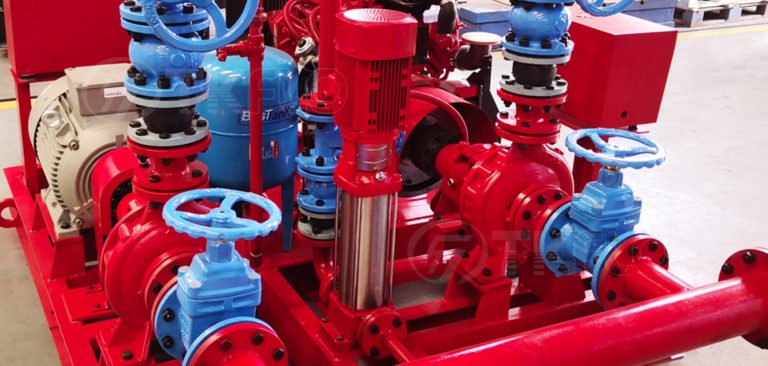
How Jockey pumps work

In addition to their importance in fire protection systems, jockey pumps can also help reduce energy consumption and wear and tear on primary pumps. By maintaining the pressure in the system, jockey pumps can reduce the number of times primary pumps need to turn on and off, which can extend the life of these pumps and reduce energy consumption.

Jockey pumps are small, high-pressure pumps that are critical components of fire protection systems. They help ensure that the pressure in the system remains within a specified range, which is essential for effective fire suppression. By maintaining the pressure in the system, jockey pumps can also help reduce energy consumption and wear and tear on primary pumps, making them an important investment for any building or structure that requires reliable fire protection capabilities.

If you’re looking to buy a jockey pump, there are several factors to consider before making your purchase. Jockey pumps are an essential part of any fire suppression system, and choosing the right one can mean the difference between a successful or failed system. Here are some of the critical things to keep in mind when buying a jockey pump.

  1. Flow rate: The first thing to consider is the flow rate of the jockey pump. It’s essential to choose a pump with a flow rate that matches the flow rate of the main fire pump. The jockey pump’s flow rate should be at least 10% of the main pump’s flow rate, but not more than 20%. If the jockey pump’s flow rate is too high, it can cause damage to the system and lead to a false alarm.
  2. Pressure rating: The pressure rating of the jockey pump is also critical. The jockey pump’s pressure should be higher than the system’s static pressure but lower than the main pump’s pressure. This ensures that the jockey pump can maintain the system’s pressure when the main pump is not running, but it won’t interfere with the main pump’s operation.
  3. Motor horsepower: The jockey pump’s motor horsepower should be appropriate for the system’s size and flow rate. If the motor horsepower is too low, the jockey pump won’t be able to maintain the system’s pressure, and if it’s too high, it will waste energy and increase operating costs.
  4. Pump material: The material of the jockey pump should be suitable for the system’s environment. If the system operates in a corrosive environment, the pump’s material should be corrosion-resistant. If the system operates in an area with high ambient temperatures, the pump’s material should be able to withstand the heat.
  5. Pump type: There are two types of jockey pumps: vertical and horizontal. Vertical pumps take up less space and are easier to install, but they can be more expensive than horizontal pumps. Horizontal pumps are more common and are generally less expensive, but they take up more space and can be more challenging to install.
  6. Manufacturer reputation: The reputation of the pump manufacturer is essential when choosing a jockey pump. It’s essential to choose a manufacturer with a history of producing high-quality pumps that are reliable and durable. You can research manufacturers online, read reviews, and talk to other industry professionals to get an idea of the manufacturer’s reputation.
  7. Maintenance and support: Finally, you should consider the maintenance and support available for the jockey pump. It’s essential to choose a pump that is easy to maintain and repair, with readily available replacement parts. Additionally, it’s essential to choose a manufacturer that offers technical support and assistance if you have any issues with the pump.

In conclusion, buying a jockey pump is a significant investment, and it’s essential to choose the right pump for your system. By considering factors such as flow rate, pressure rating, motor horsepower, pump material, pump type, manufacturer reputation, and maintenance and support, you can ensure that you choose a reliable and efficient jockey pump that meets your needs.

The Many Benefits of Pump Maintenance


By Edison Brito

Introduction
There’s no way around it: pumps play an essential role in the success of processing industries across the globe. Whether its chemical processing plants, oil fields and refineries or wastewater treatment facilities, pumps allow all these operations to function properly.

While pumps are versatile pieces of equipment, they also are not impervious to wear, which in turn impacts performance. Over time, consistent and unchecked wear can ruin a pump’s efficiency and functionality. This pathway eventually leads to failure.

The Many Benefits of Pump Maintenance
Edison Brito

While wear is inevitable with industrial equipment, it does not have to undermine a pump’s performance. The best way to keep a process pump operating at its peak throughout its lifespan is with protective and preventive maintenance. By following and maintaining a regular maintenance schedule, operators can ensure prolonged, optimal pump performance. This white paper will highlight the importance of pump maintenance while also revealing the areas to focus on for getting the most out of a process pump. For this white paper, we will focus on the maintenance concerns of centrifugal pumps.

Why Maintenance?
No matter the application or the operating conditions, a defined and routine maintenance program will extend the life of a pump. Well-maintained equipment lasts longer and requires fewer and less-expensive repairs, especially when some pumps have lifespans that extend 15 years or longer.

Regular and efficient maintenance is required to obtain optimum working life from a centrifugal pump. After purchase, the pump manufacturer typically advises the plant operator about the frequency and extent of routine maintenance. The operator, however, has the final say about how his facility’s maintenance routine will function, which could range from less frequent but more major attention to more frequent but simpler servicing. The potential cost of unexpected downtime and lost production is also a significant item when determining the total LCC of a pumping system.

The facility operator should also keep a detailed record of all preventive maintenance and repairs for each pump. This information allows operators to have an easily accessible record for diagnosing problems and eliminating, or minimizing, any future equipment downtime.

For centrifugal pumps, routine preventive and protective maintenance practices should include, at a minimum, the monitoring of:

  • Bearing and lubricant condition. Monitor bearing temperatures, lubricant level and vibration. The lubricant should be clear with no signs of frothing, while changes in bearing temperature may indicate imminent failure.
  • Shaft seal condition. The mechanical seals should show no signs of visible leakage. Any packing should leak at a rate of no more than 40 to 60 drops per minute.
  • Overall pump vibration. Imminent bearing failure can be preceded by a change in bearing vibration. Unwanted vibration can also occur due to a change in pump alignment, the presence of cavitation or resonances between the pump, its foundation or the valving located in the suction and/or discharge lines.
  • Differential pressure. The difference between the readings at the discharge and the pump’s suction will provide the total developed head pressure of the pump. A gradual decrease in the developed head pressure of the pump can indicate that the impeller clearance has widened, which requires adjustments to restore the pump’s intended design performance: impeller clearance adjustment for pumps with semi-open impeller(s) or replacement of the wear ring(s) for pumps with closed impeller(s).

Maintenance and monitoring intervals should be shortened if the pump is used in severe-service conditions, such as with highly corrosive liquids or slurries.

Quarterly Maintenance

  • Check the pump’s foundation and hold-down bolts for tightness.
  • The oil should be changed after the first 200 hours of operation for a new pump then after every three months or 2,000 operating hours, whichever comes first.
  • Regrease bearings every three months or 2,000 operating hours, whichever comes first.
  • Check the shaft alignment.

READ: 5 tips on water pump maintenance

Annual Maintenance
The pump’s performance should be checked and recorded in detail at least once a year. Establishing performance benchmarks should occur during the early stages of a pump’s operation when the parts are new with proper installation adjustments. This benchmarking data should include:

  • The pump’s developed head pressure as measured at the suction and discharge pressures for three to five conditions should be obtained. A no-flow reading is a good reference and should be included where possible and practical.
  • Pump flow rate
  • Motor amp draw and voltage, corresponding to the three to five operating conditions mentioned above
  • Vibration signature
  • Bearing housing temperature

During annual pump performance assessments, any changes in the benchmarks should be noted and used to determine the level of maintenance required to get the pump back to its optimal functionality.

While preventive and protective maintenance will keep a pump operating at its peak efficiency, there is one factor to keep in mind: all pump bearings will eventually fail. Bearing failure typically occurs due to the lubricating medium rather than equipment fatigue. That’s why monitoring bearing lubrication – another form of maintenance – helps maximize bearing longevity and, in turn, pump life.The Many Benefits of Pump Maintenance

When opting for oil for bearing lubrication, it’s important to use non-foaming and non-detergent oils. The proper oil level is at the mid-point of the bull’s-eye sight glass on the side of the bearing frame. Over-lubrication must be avoided as it can be just as damaging as under-lubrication. Excess oil will cause a slightly higher horsepower draw and generate additional heat, which can cause oil frothing. When checking the lubricating oil condition, cloudiness can indicate that overall water content – commonly the result of condensation – is higher than 2,000 ppm. If this is the case, the oil needs to be changed immediately.

If the pump is equipped with regreaseable bearings, operators should never mix greases with different properties or consistencies. Shields must be located near the interior of the bearing frame. When regreasing, ensure that the bearing fittings are clean as any contamination will decrease bearing life. Overgreasing must also be avoided as this can cause localized high temperatures in the bearing races and create caked solids. After regreasing, the bearings might run at a slightly higher temperature for one to two hours.

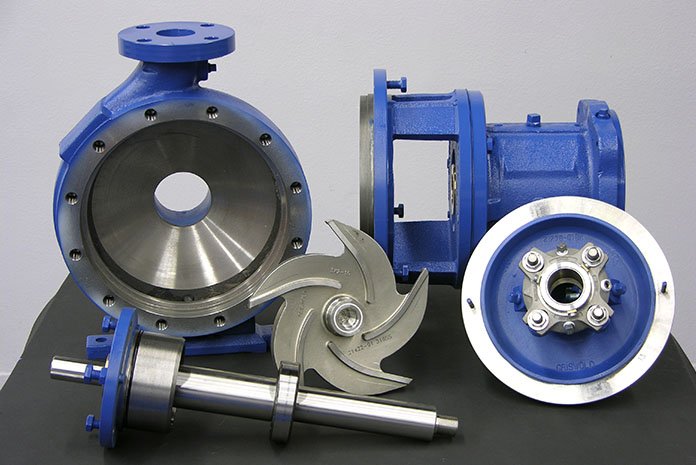
In instances of replacing a part – or several – on a malfunctioning pump, operators should take this opportunity to examine the pump’s other components for signs of fatigue, excessive wear and cracks. At this time, any worn parts should be replaced if they do not meet the following part-specific tolerance standards:

  • Bearing Frame and Foot — Visually inspect for cracks, roughness, rust or scale. Check machined surfaces for pitting or erosion.
  • Bearing Frame — Inspect tapped connections for dirt. Clean and chase threads as necessary. Remove all loose or foreign material. Inspect lubrication passages to be sure that they are open.
  • Shaft and Sleeve — Visually inspect for grooves or pitting. Check bearing fits and shaft runout, and replace the shaft and sleeve if worn or if the tolerances are greater than 0.002 inches.
  • Casing — Visually inspect for signs of wear, corrosion or pitting. The casing should be replaced if wear exceeds 1/8-inch deep. Check gasket surfaces for signs of irregularities.
  • Impeller — Visually inspect the impeller for wear, erosion or corrosion damage. If the vanes are worn more than 1/8-inch deep, or if they are bent, the impeller should be replaced.
  • Frame Adapter — Visually inspect for cracks, warpage or corrosion damage and replace if any of these conditions are present.
  • Bearing Housing — Visually inspect for signs of wear, corrosion, cracks or pits. Replace housings if worn or out of tolerance.
  • Seal Chamber/Stuffing Box Cover — Visually check for cracks, pitting, erosion or corrosion, paying special attention to any wear, scoring or grooves on the chamber face. Replace if worn more than 1/8-inch deep.
  • Shaft — Check the shaft for any evidence of corrosion or wear. Check the shaft for straightness, noting that the maximum total indicator reading (TIR) at the sleeve journal and coupling journal cannot exceed 0.002 inches.

Conclusion
While routine maintenance might seem daunting, the benefits outweigh the risks of deferring it. A well-maintained pump keeps operations effective and efficient while extending pump life and avoiding premature pump failure. Letting maintenance lapse or deferring it further and further into the future can lead to costly downtime and expensive repairs. Though it requires great attention to detail and multiple steps, having a robust maintenance plan will keep pumps running and downtime minimal, allowing their operations to thrive now and well into the future.

About The Author
Edison Brito is the Director of Sales & Business Development, Latin America at PSG® and Griswold®, Grand Terrace, CA, USA, a premier manufacturer of reliable ASME (ANSI) B73.1, heavy-duty and self-priming centrifugal pumps. He can be reached at Edison.Brito@pumpsg.com or (973) 780-7985. Griswold is a brand of PSG, Oakbrook Terrace, IL, USA, a Dover company. PSG is comprised of several leading pump companies, including Abaque®, All-Flo™, Almatec®, Blackmer®, Ebsray®, em-tec®, Griswold, Hydro™, Mouvex®, Neptune®, Quantex™, Quattroflow®, RedScrew™ and Wilden®. You can find more information on Griswold at psgdover.com/griswold and on PSG at psgdover.com.

Miners top energy tips to net zero


With decarbonisation at the forefront of miners’ agendas, the world’s leading provider of mobile and modular power solutions, Aggreko, has released top energy tips to help miners decarbonise now and into the future.

Aggreko’s Global Head of Mining, Rod Saffy, said while miners were embracing the global energy transition, some were unsure where to begin.

“For some miners it’s about knowing where to start and they may be weighing up the cost, risk and threat of new technology in the future,” Mr Saffy said.

“Fortunately, technology isn’t in the same place as it was five years ago or even two years ago. Some of the renewable power technologies available today, combined with thermal generation in a hybrid solution offer the same – if not better – levels of reliability and competitiveness than traditional thermal technology.”

Mr Saffy said power generation companies were taking significant steps to support miners on their respective paths to net-zero emissions.

“Increasingly, power companies are offering renewables such as solar and wind energy to off-grid mines, and we often integrate those with battery storage solutions and thermal microgrids,” he said.

“If you consider a hybrid power solution – where you switch in renewables to your power mix alongside fossil fuels – your operation will be more flexible and can scale up and down as needed.

“Our approach means miners can also partner with us long term without being tied down to one fuel type for their power source, and new technology is introduced as it becomes viable.

“Integrating renewables in this manner will result in greater cost-savings and efficiencies for your project.”

One solar and thermal hybrid solution Aggreko delivered for a remote gold mine in Africa resulted in more than 12% savings in fuel (about 10,000 litres a day) and the contract offered meant the miner did not have to come up with capital to invest in the solar plant. Another example Aggreko was working on, Mr Saffy said, was a hybrid solar and thermal power solution for the Salares Norte open pit mine in Chile.

“It is a ground-breaking solution designed to provide power for the entire mine, which sits at an altitude of 4,500m in the Andes mountain range and is 190km from the nearest town,” Mr Saffy said.

READ: Botswana launches tenders for two thermodynamic solar power plants

“Once complete the hybrid power plant is expected to achieve $7.4 million in cost of energy savings over the next decade a further $1.1 million in carbon tax offset over the life of the mine, in addition to 104,000 tonnes of carbon emissions savings.

“The system will surpass the Chilean government’s environmental standards as well as Gold Fields’ requirement for a minimum of 20% renewable power generation for mining operations.”

Mr Saffy said the pathways to decarbonisation that held the most appeal for miners currently included:

  • Hybrid power plants (as mentioned): These combine renewables (e.g., solar, wind) with thermal generation and battery storage, benefiting areas with limited or no access to permanent power. These are generally cost-competitive. Once solar or wind plants are installed, their generation running costs are relatively low and at zero emissions.
  • Virtual gas pipelines: Gas power generation offers a greener and more cost-effective alternative to diesel and heavy fuel oil. A virtual pipeline is a substitute, and an alternative, for a physical pipeline. Gas is instead transported as LNG or CNG to the point of use by sea, road, or rail. For mines not connected to a physical pipeline and looking to switch to gas from diesel, a virtual pipeline model simply imitates their current supply solution. For users who are connected to a gas pipeline but are looking to supplement insufficient or unreliable pipeline capacity, the virtual power plant solution has several advantages over diesel.
  • Renewable energy: Renewable energy power systems are an effective way of tapping into natural resources to provide power, such as wind farms, hydro power and solar. The challenge is their reliability on weather, hence why if power is interrupted for any reason it is important to ensure they’re backed by with batteries or a temporary thermal power solution.

A significant future fuel in this space will be hydrogen. Investment in hydrogen is on the rise too because of the role it can play in supporting a global transition to net-zero. Its versatility and compatibility with existing furnaces, engines and generators make it particularly appealing for the mining industry. Businesses around the world are at the beginning of their hydrogen journeys and need to be supported to find the best ways of integrating it into their operations.

Mr Saffy said energy sources likely to become more prevalent in mining during the next 10 years included biofuels (would become less expensive), hydropower, energy storage (such as pumped, mechanical flywheel), and gas generation which runs with a hybrid renewable system. While it is increasingly utilised now as power source, wind and solar power is expected to gain more momentum.

Aggreko is also experimenting with mobile wind solutions, re-deployable solar panels and tidal wave power (though tidal wave power might not be for the mining industry yet). The company is also accelerating its investments in hydrogen technology. Trials are underway in Europe on two different technologies, where Aggreko is collaborating with lead customers and partners trialing hydrogen generators and fuel cell battery hybrids.

“It’s a very exciting time in the mining sector, and it will be amazing to see the innovations presented during the next few years as miners and energy companies collaborate and come up with new ideas for a greener future,” Mr Saffy said.

“The key though is to start now – you can embrace renewables now into your energy mix because, done correctly, cost and emission savings can be greatly reduced without compromising reliability.”

Aggreko has its own net-zero goals by 2050 and has a 2030 target to reduce diesel use in its customer solutions by 50%.