Proper maintenance practices for solar water pumps


When it comes to the solar water pumps, the maintenance touches on both the pump as well as the solar panel. This is because the two work concurrently in the pumping process.

Solar energy systems require periodic inspections and routine maintenance to keep them operating efficiently. Also, from time to time, components may need repair or replacement. You should also take steps to prevent scaling, corrosion, and freezing.

While you might be able to handle some of the inspections and maintenance tasks on your own, others may require a qualified technician.

Here are some easy troubleshooting tips.

Solar panels
Contrary to popular belief, maintenance of the solar panels is easier than most people perceive. Every couple of years, the solar panels need to be cleaned with some soap and water. Moreover, as long as there is sunlight, the solar panels will continue to operate for 25 or so years without any additional maintenance.

Water pump troubleshooting
When turning on a faucet, take note of the water flow. If there is little to no water flowing out then your pump may be set too high in the water source. This is because over the course of time as the pump pulls water from the source due to high water demand, it ends up draining the water levels such that it is no longer submerged. On the other hand, the low levels could be attributed to drought during the dry seasons.

Pumps should not run continuously. If this happens, it may be an indication of a break somewhere in the line. The other possible cause could be a check valve in the riser pipe stuck open and as such in need of repair. On the other hand, the break will either be between the pump and the building or within the building’s plumbing. Similarly, a soggy area in the yard might indicate a break in the pump line.

It is important to note that it will be hard to tell if the pump is running continuously unless there is a small control light in place that goes on when the pump is running. Alternatively, the water to the house could be shut then the water pressure gauge observed. If this holds steady, the check valves are working and there are no leaks in the lines. However, if the pressure drops, there is a leak in the line to the house, or there is a problem with a check valve.

Another common problem is where the water pump runs for a few seconds and then shuts off. This is likely to mean that pressure is building up too fast. This, in turn means that there is not enough air in the pressure tank. It is thus recommended that one enlists the services of a professional at this point.

Selecting the right metering pump for your chemical application


A metering pump is designed to move a precise volume of fluid within a specified period of time. This process is referred to as metering or dosing, hence the name metering pump. In most cases, these pumps are used to distribute liquids such as chemicals and solutions. Some common industrial uses for these are water treatment plants, chemical processing plants, and many different agricultural applications just to name a few. It is important to choose a pump that is rated for the temperature, pressure, and fluids used in your applications.

In today world, a metering pump also known as dosing pump is something that is commonly used in many different industries, either used for adding chemicals into a solution or a variety of other things. Due to variations and variety of chemical pumps available, selecting the correct chemical metering pump can be a formidable task. Chemical pumps are designed and constructed out of materials that can withstand substances with varying levels of viscosity, corrosiveness, and abrasiveness. Some chemical pumps are also metering pumps, which provide flow measurement and control for applications that require precise volumes of chemicals.

Chemical pumps can handle applications in many different industries, from general industrial applications to oil and gas, brewery and distillery, semiconductor and others. Corrosion is a major concern with many chemicals. Acids such as sulfuric acid and hydrochloric acid are especially corrosive. In addition to acids, chemicals that pose corrosion problems to varying degrees are chlorine, alkaline solutions, and water. Care must be taken to select a pump manufactured from a material that is compatible with the chemical media.

In addition to chemical media and pump construction materials, what other specifications are the most important to engineers when selecting a chemical pump?

Factors to consider when selecting a chemical pump

The first step in chemical pump selection is a proper understanding of the application requirements and the chemical media properties along with selecting the pump with the specifications to perform the task. However, it is important to pay attention to details and get the experts involved since there are quite a few things to consider when deciding which type of metering pump is best for your application.

The volumes and pressures of material pumped through the equipment may vary greatly for different situations, but it must always be precise. In order for this to work effectively, very specific technology is required.  It is crucial to understand this technology when selecting the proper size and style of your metering pump.

According to Mr. Enrico Gemme, GemmeCotti’s Managing Director, the most important element that needs to be considered while selecting a pump is to understand exactly your needs in order to offer the best solution in terms of materials and design. Sometimes it’s not enough to know the required head, flow, the liquid that has to be pumped and its temperature, but also information about the application are often necessary to find the right solution.

“Moreover, our customers increasingly require a larger customization of the standard product, which can concern materials, pump configuration, pump design or accessories, according to each specific application, and this is another element to be considered during the selection,” said Mr. Enrico Gemme.

A metering pump operates on a fairly simple concept, but there are many factors that influence the style and size of pump that is needed. In order to pick the best metering pump for your application you will need to consider several factors.

Flow Rate

This is one of the most important things to consider. Knowing your expected or desired flow rate is going to be a crucial step in choosing the proper equipment. This is measured in gallons per minute (GPM), although in day-to-day speak, this translates into the pump diameter measurement. A good rule of thumb is to make your maximum expected flow rate no more than 90% of the pump’s capacity. This way you will have room for small increases if needed. Remember: a higher flow rate means a larger pump size is required.

Operating Environment

Here is another one of the first variables you need to keep I mind. Where will the equipment be operating? Is the metering pump going to be outside in direct sunlight? Will it be exposed to below freezing temperatures? This may sound obvious, but it can be overlooked very easily. The operating environment will most definitely impact the performance of the pump. If the pump will be operating in cold temperatures for example, you must make sure the fluid that is being pumped will not freeze at that specific temperature.

Fluid Composition

This is the most important factor when selecting a pump in order to avoid corrosion and unnecessary wear and tear on your pump. The composition of your pumping fluid is also important when deciding on your metering pump type and size. What’s the chemical makeup of the fluid to be pumped? What’s the consistency? Is it a slurry (thick suspension of solids in liquids), or is it a clean fluid? Thicker ones will require the use of special fluid ends. Extremely thick liquids that contain solids may even require special diaphragms in order to operate efficiently.

Pump Construction Materials

Many industries frequently handle corrosive chemicals or abrasive materials that require more heavy duty pump components. It is vital for you to know the chemicals that the pump will be exposed to so that you select a material that is capable of withstanding that chemical exposure. Chemical metering pumps are made from a variety of materials to suit the needs of different applications. For instance, it would be risky to purchase a pump with plastic heads if the chemicals that you use are solvent-based. Such chemicals may dissolve the plastic quickly. Stainless steel may be better option in such a case.

The Desired Capacity

Think about the discharge pressure and flow rate needed in your application before you select a chemical dosing pump. You should avoid over-sizing the pump because it will use a lot of energy during its normal operation.

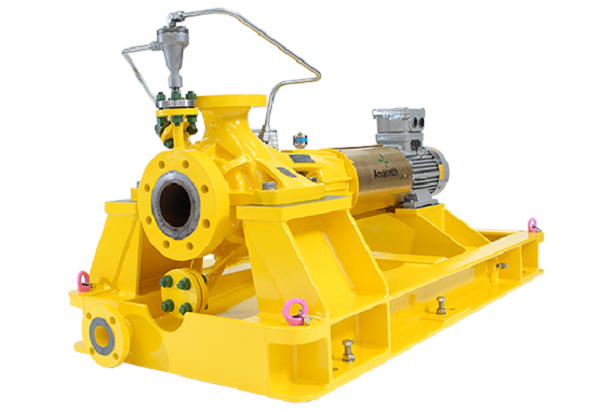
Nathan Ireland, Export Sales Manager at Amarinth Ltd affirms that, “As with all centrifugal pumps the duty point is the key aspect when selecting the pump sizing. The fluid properties dictate the materials of construction and type of pump needed.”

Select a chemical metering pump that can deliver your desired flow rate or discharge pressure about 85% of its capacity. Such a pump will have the reserve capacity needed to perform when requirements exceed the normal requirements of your application. The pump that you select should also be able to deliver the minimum performance that you desire at about 10-15% of its capacity. Such a pump will be able to be accurate at measuring the small volumes of chemicals that are needed.

Pump Drivers

Select a chemical metering pump whose operating system is compatible with the energy available at your site. For instance, it would be wrong to select a pump that runs on electricity if only natural gas is available at your site.

Leak Protection Mechanisms

You should also consider buying a chemical metering pump that has a system that will alert you in the event of a leak. Such a pump will help you to avoid the accidental discharge of excess amounts of chemicals during the operation of the pump. Some pumps sound alarms in case a leakage is detected within the diaphragm heads of the metering pump. Such a system enables you to respond quickly so that the leak is fixed before it affects your operations.

Viscosity

In order to select the right pump, you need to know the viscosity of the fluid to be pumped. High viscosity fluids require more robust pumping equipment.

Temperature

How hot will the fluid you are pumping be? This will affect which pump materials are best suited for your application.

Pressure

Another factor you should consider when selecting your pump is what the pressure conditions on the inlet and outlet of your pump will be. This information will help you determine the right equipment.

You are likely to select the most appropriate chemical dosing pump for your needs if your selection is based on the factors above. Consult an expert in case you are unsure about how to choose between several pumps that meet the criteria above.


Measuring abrasive slurry density the smarter way


Abrasive slurries are watery mixtures of insoluble matter consisting of hard, abrasive particles, commonly present in applications such as dredging, offshore, well-servicing industry, metal & mineral mining, maritime, cement, power and tunnel construction.

For example, in dredging, underwater deposits are excavated and the slurry transported to another place. On the other hand, in building construction cement can be transported as a slurry through a pipeline.

Such application areas need productivity monitoring. This can be defined as the amount of material pumped per unit time (in kg/s or ton/s). It is this essential to know the slurry density (in kg/m3 or ton/m3) together with the flow rate (in m3/s) or flow velocity (in m/s) of the slurry through the slurry pipeline. Furthermore, density measurement is necessary for quality control purposes. This will also aid in the monitoring of the process consistency over time.

In order to be able to adjust the process, from an economical point of view it is desirable to have the slurry density available in real time or within a few seconds after the measurement.

Abrasive slurries deviate in at least two ways from ‘average’ slurries. Their most striking characteristic is the presence of abrasive particles. This thus necessitates the use of wear resistant materials for the part of the measurement device that gets in contact with the slurry. Furthermore, the density of these slurries is usually high, up to 2.5 ton/m3. These ‘dense materials’ will put constraints to measurement types that rely on easily penetration of slurries.

Methods of conducting abrasive slurry density measurements

Density measurement of flowing (abrasive) slurries is based on physical processes such as absorption of radioactive radiation, reflection of (ultra)sound waves, direct (gravitational) mass/volume measurement or percussion with respect to the slurry;

Nuclear measurement
This method works through the gamma radiation absorption principle. This principle is the most common. This is because as measurement is conducted at the outside of the pipe, installing of the setup does not interfere with production loss to a large extent.

However, some of the limitations are such that large pipe diameters and high slurry densities may lead to radiation sensing that is in the order of magnitude of background radiation level. Moreover, there are legislation constrains on working with radioactive technology.

Ultrasonic measurement
The method works using the principle of reflection and transmittance of (ultra)sound waves. In ultrasonic density measurements, a transducer made of a piezo-sensitive material sends ultrasonic pulses into the to-be-measured slurry, and a computer analyses the returned echoes.

Percussion technology

By its very nature the Percussion method uses a non-invasive, clamp-on approach. This maintenance-free method uses a small, compact sensing module that is mounted at the outside of the slurry pipe. This module has a built-in striker and receiver. The striker impacts the outside wall of the pipe with pre-determined force and duration. This creates vibrations in the measurement zone of the slurry-filled pipe. The sensor component of this module receives those vibrations and transmits them to the processing module which selects the most informative of the vibration spectrum harmonics generated to produce highly accurate and precise slurry density measurements.

Non-nuclear slurry density measurement
Experts such as Arjan Vriend from Alia Instruments, advocates the use of non-nuclear slurry density measurement as opposed to the other techniques. He points out the main issue in the usage of nuclear material.

According to Mr. Vriend, the radioactive source is the cause of a lot of practical drawbacks with regards to licenses, training, shipment and operators who have their reservations about using such technology. He also points out that the method has an impact on the business management of companies who have to answer to society’s pressure to reduce nuclear waste, and to operate in a sustainable manner.

Industry application
The non-nuclear slurry density measurement is applicable in basically all applications which are covered today by radiometric devices non-nuclear alternatives.

However, there are new technologies on the market, most of which have some downsides. Some of them have troubles with gasses in the process, while others fail to work well with vibrations. Mr. Vriend clarifies that Alia Instruments always considers the amount of wear of the material.

This, he says, is because they supply an inline meter. Some very abrasive processes have proven to be rather incompatible with their technology, as the material would wear the rubber liner in months or even weeks.

Advantages
Some of the compelling reasons that support this cause include the fact that non-nuclear slurry density measurement ensures a more sustainable business management and company reputation.

He further adds that it is a demonstration of social responsibility, as well as responding to society’s pressure to reduce nuclear waste. Mr. Vriend points that employees using this method will not be afraid of performing checks and repairs as opposed to other techniques, citing the risks involved in the same.

The non-complexity of this method removes the need for special RSO trainings or specifically trained personnel. Moreover, there are little to no concerns about more stringent regulations in the future.

Factors to consider when switching to non-nuclear methods
Should a company wish to switch to non-nuclear methods, they ought to consider what demands they have based on their process, and what technology fits best. In the case of Alia Instruments, for instance, Mr. Vriend points out that they have a meter which has the benefit that it really measures all materials, and has no problems with larger parts, sediments or gasses.

On the other hand, most of the potential customers claim they have not switched because of lack of a viable alternative. This is in terms of technology and finances in comparison to the same in nuclear methods. The technological bit poses a challenge especially when you consider misconceptions such like how nuclear density meters are very accurate, and therefore can be used as a reference to other meters.

It is important, however to note that these meters also have their measuring error, especially when people fail to have it re-calibrated often.  The half-life of the source also makes it a requirement that the task is undertaken by the supplier.

Moreover, end users often fail to realize that the signal of a nuclear meter is significantly delayed. This acts to their disadvantage such that by the time they notice a change in the signal, the material has already passed.

Finally, when it comes to finances, it is advisable to make a good comparison between the total cost of ownership of the nuclear meter compared with the alternative. This should not be limited to just the purchase costs.

Instead, end users should consider the costs of RSO certification, the high disposal costs, but most of all, the lost hours of all the hassle people have of importing and transporting the meter, permits and the maintenance by the supplier as well.