Like so many other machines in the mining environment, pumps also, require regular and consistent maintenance to function optimally and reliably.
Due to their significance to mining operation, it goes without saying that pump failure could jeopardize an entire operational efficiency in the form of unscheduled repairs, stoppages or worker potential injury.
That’s why Rob Bond, Slurry Pumps Manager from KSB Pumps and Valves posits that, “Operators should conduct proactive and regular maintenance as suggested by the OEM and at scheduled shuts.”
Reactive maintenance
Most companies strive toward managing their assets proactively. However, others are often caught off-guard, whereby they find themselves having to maintain their pumps as a result of catastrophic failure.
According to the authors of the report, Asset Management 101, Larry Covino and Michael Hanitas, this can inhibit the plant from having enough time and resources to complete the maintenance routines and move into a more predictive mode.
“Mines may experience various challenges including spare parts shortages, increased overtime and callouts, poorer quality repairs and documentation due to limited planning time.”
To avoid such catastrophic occurrences, Covino et al, emphasise that it is essential to stick to a proactive maintenance program, even when the pump seems to be performing perfectly.
Proactive pumps maintenance
Covino et al posits that there are benefits that could be gained from sticking to proactive maintenance of pumps. To illustrate this further, they say there are various tools in the market that simplify predictive maintenance.
“The aim of such tools is to improve the efficiency of industrial centrifugal pumps by recognising acceptable and unacceptable operating conditions using energy monitoring, vibration and neural network pattern recognition techniques.”
Paraphrasing the words of another pumps commentator, Todd Sturtz on his report on Pumps and Systems, Sturtz says, mines could use such devices to measure and monitor the pump’s raw power signature and understand the torque profile of the pump as it operates.
“Furthermore, the monitoring instrument comes with a software system that understands the complex algorithms of the pump behavior, detects obstruction and controls the pump whenever necessary.
“Consequently, time-consuming and costly necessity of manually lifting pumps is removed, thus eliminating downtime and other costs associated with pump ragging.”
Back to basics
Proactive pump maintenance allows industrial plants to keep pumps operating efficiently, detect problems in time, schedule repairs, and avoid early pump outages.
Nonetheless, basic and regular maintenance also reveals deterioration in efficiency and capacity, which can occur long before a pump fails.
A manual on basic pump maintenance, “Centrifugal Pumps: Basic concepts of operation, maintenance, and troubleshooting”, highlight the following as some of the basic and most common maintenance check list:
- Incorrect pump — should pump experiences flange leaks, an overloaded motor, abnormal vibration, or a low flow rate, it could be due to having the wrong pump for the system.
- Poor operating conditions —insufficient flow rate, a high bearing temperature, or abnormal vibration could be an indication that the pump is not properly matched to the operating conditions.
- Improper installation —an improperly installed pump may contribute to a variety of issues, including high operating temperature, an overloaded motor, flange leaks, and vibration.
- Lack of maintenance —a pump that has contaminated bearings, suffers leakage, or runs at a high temperature, a lack of regular and proper maintenance could be to blame.
- Wear —Worn parts or materials are among the most common contributors to pump failure.
Other basic methods that help to prolong slurry pump life as well as reduce maintenance include the use of reinforced coatings, which are also known to reduce equipment costs.
The manual further adds that operators should consistently use high quality bolt and nut lubrication in case they would have to disassemble pumps on future maintenance of their pumps.
Volatile mining environments
Corrosive and abrasive liquids that could punish pumps overtime are never in short supply particularly in underground, coal, hard rock and open cut mines.
Due to the unfavorable conditions of the mining environment, it goes without saying that poorly maintained pumps can quickly lose a high percentage of their operational efficiency.
Most importantly, this could result in a negative impact to mine output, thus impacting on the bottom line of the business. Therefore, planners and schedulers should conduct maintenance when it is most cost-effective and precedes functional failure.
Equally important, they should avoid reacting to assets only when they reach functional failure.
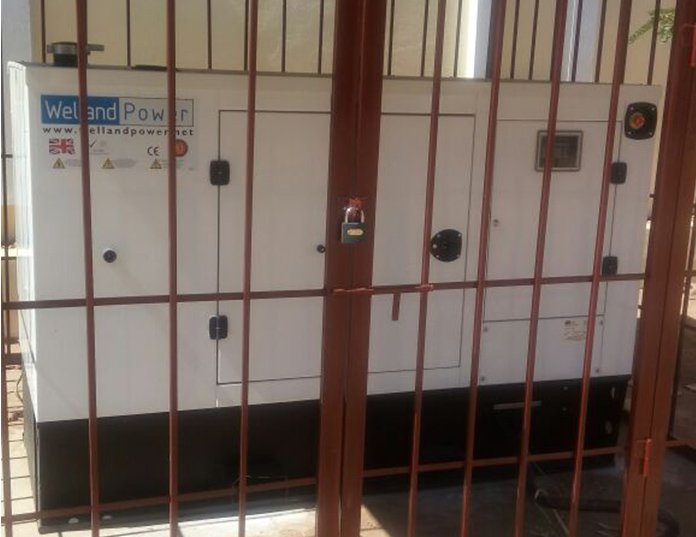
 Typically when considering diesel generators people choose an off the shelf solution. In some cases this can be fine, however in many cases a better custom made designed package would give a significantly better result, especially lower fuel consumption during operation and lower voltage drops when the load is applied.