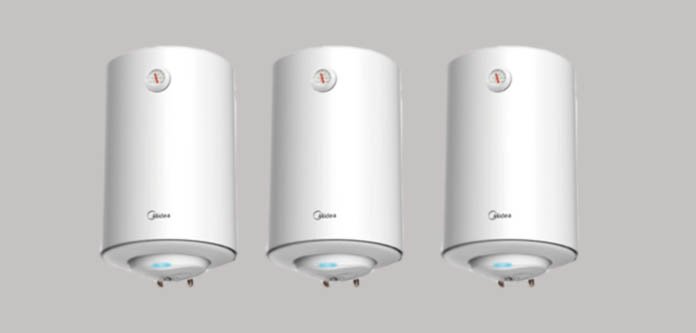
How Electric water heaters work


An electric water heater uses two heating elements to warm water inside the tank. When a designated water temperature is reached the heating element will cycle off.

The electric water heater uses 240v of alternating current to operate two heating elements; one near the middle of the tank and another near the bottom. Each element is controlled by its own thermostat.

If the water temperature and pressure rises above normal operating levels the temperature and pressure valves open to stabilize the system. A valve that leaks need to be replaced immediately.

If electric water heater is not working properly, first determine if a fuse has blown off. Also check the reset button and the high level thermostat. You can also check each element and thermostat for continuity.

Simon Pogson, marketing director at Africa supplies Ltd says that electric water heaters are cheap in the long run among other advantages. Here is the excerpt:

What are the advantages of an electric water heater?

Simon: In addition to being low maintenance, electric water heaters have several advantages.The upfront cost of purchasing an EWH tends to be relatively low. It’s a competitive market, but you still need to be careful.

With the biggest, established brands you’re often paying for the name rather than the technology and there can be question marks around whether you’re buying a genuine product or a fake.

At the other end of the scale products will rarely be reliable and will probably end up costing more in repairs and replacement. However, great deals can be found in the middle of the market, where brands like FlowPlumb are trying hard to establish themselves. FlowPlumb water heaters are feature packed and are designed to be long-life solutions, representing great value for money.

European brands are being driven hard by the EU to be as efficient as possible, so electric water heaters from, say Italy, tend to use less electricity. The less electric a water heater uses, the cheaper it is to run.

Safety is also a major plus. With water and electricity, you don’t want any unnecessary risks. This is where it pays to avoid the cheapest on the market. Again, mid-market water heaters like FlowPlumb score highly on safety with features like safety thermostats, shock proof casings, and high liquid intrusion protection.

How is an electric water heater maintained? And how do you help in maintenance?

Simon: One of the biggest advantages of electric water heaters is that they are simple to manage and shouldn’t need frequent checks or maintenance. However, there are two parts to the water heater that you do need to keep your eye on;

All electric water heaters should have a removable anode rod in them. The anode rod is made from a different metal to the tank (usually magnesium, but sometimes aluminium or zinc) and, as strange as it may sound, is designed to rust.

By sacrificing itself, the anode rod prevents rust from attacking the tank, thus prolonging the life of the water heater. Anode rods usually last about two years, so should be replaced by a plumber every other year. Failure to replace the anode isn’t dangerous, but your water heater won’t last as long. It’s a lot cheaper to replace the anode every two years than the whole water heater!

The other part that causes problems is the heating element itself. Over time, limescale attaches itself to the heating element, blocking the heat from the element from transferring to the water. When this happens, the water heater becomes inefficient – it needs to use more electricity to produce heat and it takes longer to heat the water, both of which costs you more money.

ALSO READ: How centrifugal pumps work – with video

To combat this, all FlowPlumb Electric Water Heaters feature a unique Blue Forever heating element, an advanced technology where the element is coated in an ultra-smooth ceramic finish to prevent limescale from being able to attach itself.

This means the element continues to work much longer than the normal elements in other brands, so the water heater remains efficient, and you save money by not having to replace the element as often. The Blue Forever heating element is so good that it’s included in our five-year warranty.

When these items do need replacing it’s important to have a professional do it. Water and electricity is a lethal mix, so any electric water heater maintenance should be left to a trained professional. With our distributors, we have established training programs throughout Africa to train installers in the best, safest and most efficient way to install our products.

 Elaborate about its power consumption

Simon: FlowPlumb’s range of small capacity electric water heaters (10 – 30 litres) all have good energy efficiency, having an energy rating of “B”, while our mid capacity (50 – 150 litres) are “C” rated.

FlowPlumb tends to have a lower energy consumption thanks to three features. In additional to a thick tank insulation, the interior of the tank is powder coated with our Forever Blue glass enamel, and our elements are all Forever Blue coated.

Energy efficiency on brands like FlowPlumb is an important feature and will only get better as technology is developed. Yet, fo the best energy efficiency, you can always turn to our Solar Hot Water Heaters. The FlowPlumb offer includes everything you need in one box: solar panel, tank, mounting kit and all connections. The panel has a 95% absorption rate, making it one of the most efficient systems available.

 How is your footprint in Africa?

Simon: FlowPlumb is dedicated to the African market. We identify gaps in the market where customers are being let down by poor quality, high prices, or solutions that are not available locally and search the world for the best products or systems, supplying them though our local Distribution partners. The conditions of us entering any market are that we will only supply high quality products and only if we can offer good value for money.

We have over twenty years’ experience of supplying the African market and have distribution in over twenty countries. We are still expanding our Water Heater distribution, and actively looking for distributors.

Is this product being received well in Africa?

Simon:FlowPlumb is probably the fastest growing electric water heater brand in Africa right now. Although we knew we had a great product at a great price, the level of demand has surprised us.

The Blue Forever element and tank glass coating is really unique and that promise of a longer life at a reasonable price gives customers a choice that wasn’t there before.

 What are the other products that you produce?

Simon: Our Water Heater range includes instant hot water heaters, electric showers, solar and commercial solutions in addition to our Blue forever electric water heater range. What we really do though is offer systems and solutions, so the wide FlowPlumb range consists of water delivery systems and waste water drainage.

Our potable water systems include MDPE and PPR and a really exciting system that utilises Polybutylene to make a flexible pipe so you don’t need to use many expensive fittings. It cuts installation time to about a quarter and eliminates opportunities for the system to leak. It’s the most perfect plumbing system for Africa that we’ve seen: reliable, fast and easy to install and a system that’s designed to lower the cost of installation.

For removing waste water we can supply the whole system, from internal drainage, to rainwater guttering, to underground drainage.  We call it our “Roof to River” solution and again it includes certain products that make life in Africa a safer, more hygienic experience.

There are several flood defence products in the range and specialist systems like chemical drainage and acoustic drainage. By far the most popular products are our manhole chambers that replace the old brick built ones with a smooth bore PVCu unit that simply drops into a hole, taking a fraction of the time to install and proving many more decades of use.

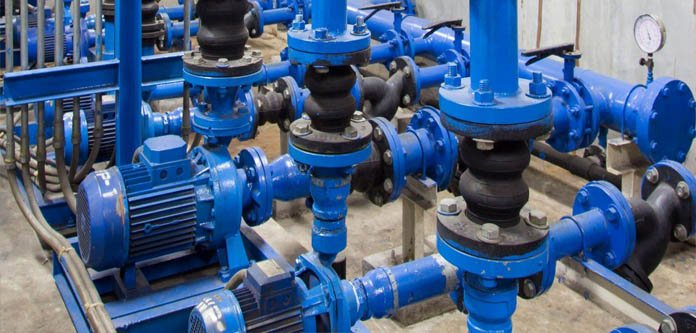
Cheaper irrigation methods for profitable farming


Profitable farming requires a reliable and affordable water supply for irrigation as water plays a crucial role in determining loss or profitable harvest. The irrigation must be cost-effective and sustainable for profits to be realized.

Solutions
Electric, petrol or diesel-powered pumps are the most used by farmers to pump water from sources such as rivers and boreholes into a tank or onto the farm directly.

Most of the time, the cost of pumping water goes up due to the fluctuating price of electricity and petrol or diesel.

Farmers spend a lot of money to pump water using electric machine yet there are cheaper options of pumping water for irrigation, which include solar and windmills. Several farmers have however embraced solar pumps to pump irrigation water.

Solar pumps
Solar pumps are economical because they can directly use a technology known as PV array (without a battery) to pump water into the tanks, which is then distributed to the farm by gravity.

The solar system operates on the principle of photovoltaic (PV) technology, which converts sunlight to electricity for the machine to pump water. The cost of setting up a solar system depends on the size of the gadget.

READ: 5 Factors to consider when choosing irrigation pump

For instance, a 120-watt solar panel can pump 10,000 litres of water at five metres depth and 3,500 litres at 10 metres depth, which is adequate to irrigate half an acre.

Installation of electricity definitely costs higher depending on the distance from the transformer.

Reduces the tough task
A solar pump thus offers the farmer long-term relief as one does not incur monthly bills.

Submersible solar pumps can be installed below dams which collect rain water. The pump pushes the water to a maximum height of 20 metres. Surface pumps are placed above the ground and are primarily used to move water through the pipelines.

Eco friendly
Besides being low maintenance, solar water pumps are eco-friendly as they do not release any gases into the atmosphere.

There are smaller solar water pumps for the small-scale farmer in the market, thus farmers have no excuse not to irrigate their farms affordably.

Having a water pump reduces the tough task of carrying water physically from the source to irrigate your crops.

How centrifugal pumps work – with video


Centrifugal pumps are the most common type of pump used in industry, agriculture, municipal (water and wastewater plants), power generation plants, petroleum and many other industries.

They are the primary pump type in the class of pumps called “kinetic” pumps and are distinctly different than “positive displacement” pumps.

All centrifugal pumps include a shaft-driven impeller that rotates (usually at 1750 or 3500 RPM) inside a casing. The impeller is always submerged in water, and when the pump is operational the impeller spins rapidly.

The centrifugal force applied to the water from this rotation forces the water outside of the casing, where it exits a discharge port. More liquid is introduced through a suction port, or inlet. The velocity imparted to the liquid by the impeller is converted to pressure energy or “head”.

Centrifugal pumps are unique because they can provide high or very high flowrates (much higher than most positive displacement pumps) and because their flowrate varies considerably with changes in the Total Dynamic Head (TDH) of the particular piping system.

This allows the flowrate to be “throttled” considerably with a simple valve placed into the discharge piping, without causing excessive pressure buildup in the piping or requiring a pressure relief valve. Therefore, centrifugal pumps can cover a very wide range of liquid pumping applications.

RELATED:

The single most important aspect, in selecting centrifugal pumps

Throttling Flowrates
As described above, one key advantage of centrifugal pumps is the ability to “throttle” their flowrates over a wide range. Throttling centrifugal pumps with a discharge valve is not as energy-efficient as using a Variable Frequency Drive (VFD) to slow the pump/motor speed down, but it is much less expensive to install. Of course, throttling a centrifugal pump’s flowrate has certain limits.

They should not be throttled below the “minimum safe flowrate” indicated by the pump manufacturer for other than a minute or so; otherwise excessive recirculation can occur inside the pump casing which can cause excessive heat buildup of the liquid.

In addition, too much “throttling” will cause excessive shaft deflection which will increase the wear on bearings and seals inside the pump.

Therefore, the ideal flowrate for a centrifugal pump is near its “Best Efficiency Point” (BEP). The BEP can be found on many pump Head-Flowrate Curves that have Efficiency curves shown on the same drawing. The BEP for a given model, speed and impeller diameter is the point where Efficiency is highest; this maximizes energy efficiency as well as seal and bearing life inside the pump.

Another important point is that running centrifugal pumps at 1750 RPM motor speeds instead of 3500 RPM motor speeds will reduce wear on seals and bearings by almost 4 times and the pump will also be less likely to cavitate when less favorable suction conditions (long suction pipes, high “lifts” from ponds or pits, low supply tank levels, or liquids with high vapor pressures such as hot water, gasoline, etc) are involved.

However, centrifugal pumps running at 1750 RPM require much larger casings and impellers than those running at 3500 RPM and therefore, cost considerably more money.

Head – Flow Curves
Most centrifugal pump manufacturers publish “Head-Flow” Curves for each model, impeller diameter, and rated speed (RPM) for the centrifugal pumps they manufacture. A key point regarding these Head-Flow Curves is that all centrifugal pumps will always run along their Head-Flow Curve and the resulting flowrate will always be at the intersection of the pump’s Head-Flow Curve and the “System” Curve which is unique for each piping system, fluid and application.

System curves can be developed quite easily using Hydraulic Modeling Software and compared to various pump Head-Flow Curves in order to properly select centrifugal pumps that meet each user’s unique system and flowrate requirements.

RELATED:

3 factors that determine proper centrifugal pumps selection

Dultmeier Sales has engineers on staff with Hydraulic Modeling Software to help pump users select the correct pump(s) for their system and flowrate requirements. Please call us at 1-888-677-5054 for assistance.

Another important point is that centrifugal pumps will require their maximum horsepower, for a given impeller diameter and RPM, at maximum flowrate on their Head-Flow curve. As the Head (or Discharge Pressure) a centrifugal pump is working against is increased (i.e.-throttling valve being closed, tank filling up, strainer clogging, longer or smaller diameter piping, etc.), the flowrate will decrease and horsepower will also decrease.

Viscosity
Centrifugal pumps are designed for liquids with relatively low viscosity that pour like water or like a very light oil. They can be used with slightly more viscous liquids such as 10 or 20 wt. oils at 68-70 deg F (ambient temperatures) but additional horsepower must be added because centrifugal pumps become less inefficient with even slight increases in viscosity and require more horsepower.

When viscosity of the liquids exceeds those of 30 wt oils at ambient temps (approx. 440 centistokes or 2,000 SSU), centrifugal pumps become very inefficient and require much more horsepower.

In those cases, most pump manufacturers start recommending positive displacement pumps (such as gear pumps, progressive cavity pumps) instead of centrifugal pumps in order to keep horsepower requirements and energy usage lower.

Horsepower
Centrifugal pumps also require increases in horsepower when pumping non-viscous liquids that are denser than water such as fertilizer and many chemicals used in industry. Water has a density of 8.34 lbs/gallon. The specific gravity of any liquid is the density in lbs/gallon of that liquid divided by 8.34.

The required increase in horsepower for a centrifugal pump used for a more dense liquid than water is directly proportional to the increase in specific gravity of the liquid.

For example, if a particular fertilizer has a specific gravity of 1.40 (i.e.-1.4 times the density of water or 11.68 lbs/gallon), then the increased horsepower for the pump would be 1.4 times the horsepower required when pumping water with the same pump.

Therefore, in this example, if a 20HP motor was required for pumping water, then a 30HP motor would be required for pumping the fertilizer (actually, 28HP would be required which is 1.4 x 20 HP but the next largest motor commonly available is 30HP, since 25HP would not be sufficient).

WATCH VIDEO
